 Linqia · 2022–2023 Linqia, Influencer Marketing
Linqia: Content Workflow Review
- Role
- Lead Product Designer
- Company
- Linqia
- Timeline
- 2022–2023
- Location
- San Francisco, CA
Contents
- The problem
- Workflow: Design System in Practice
- What the feature looked like before
- Early Concepts, Feedback Cycles & Usability Testing
- Final Showcase & Key Outcomes
Linqia curates Influencer/Creator Ad Campaigns from conception to scale for enterprise brands
Linqia's platform is specifically designed to drive business impact, leveraging the power of 1.5 billion data points to inform creative strategies. They enable seamless creator discovery through Google Vision and offer a unified dashboard to meet brand-safety requirements, manage content, streamline approvals, and facilitate reporting.
The problem
Brands, Linqia Account Managers and creators all met in content review, but it ran on manual emails, came in three separate versions, and a review cycle took days.
- Manual follow-up. Account Managers emailed clients to ask for feedback. Nothing moved content to the next reviewer on its own.
- Three versions of one feature. Clients, Account Managers and Creators each had their own review page, so every change had to be made three times.
- Rigid review steps. Account Managers couldn't easily change who reviewed content, or in what order, once a review was under way.
- Hard to learn. Research and stakeholder reviews found usability issues: key actions were hidden in card menus, and users needed a lot of guidance.
Workflow: Design System in Practice
Workflow Review is at the core of the relationship between clients and internal Linqia Account Managers, laying the foundation for their collaboration. It entails a structured process where clients actively review, provide feedback, and request changes to the proposed content before it is published by Creators/Influencers. Additionally, these review cycles would extend across the entire platform, facilitating the evaluation of 'Content Briefs' and the selection of intended Influencers for marketing campaigns.
As the Lead Designer, along with our broader team, we utilized the newly established design system and principles to focus on the primary goals for the Workflow Review project, which are outlined below:
- Streamline Content Review for Clients: Enhance the system to allow clients to easily review content by adding comments, providing feedback, and requesting changes effortlessly.
- Automate Review Cycle: Implement an automated process for pushing content to be reviewed, replacing the current manual method where Account Managers send emails to prompt clients for feedback.
- Flexible Modification of Review Groups/Steps: Provide internal Account Managers with the ability to modify review cycles as needed without causing any disruptions.
- Enhance User Experience to Avoid Obstacles: Improve the UX of the current product to prevent users from encountering obstacles that hinder their tasks.
- Retain Effective Patterns: Preserve existing patterns that have proven to be successful, as they are not a priority for modification.
The Process
Similar to the Payments project, establishing the different personas impacted was crucial, encompassing not only Clients and Linqia Account Managers but also Creators/Influencers.
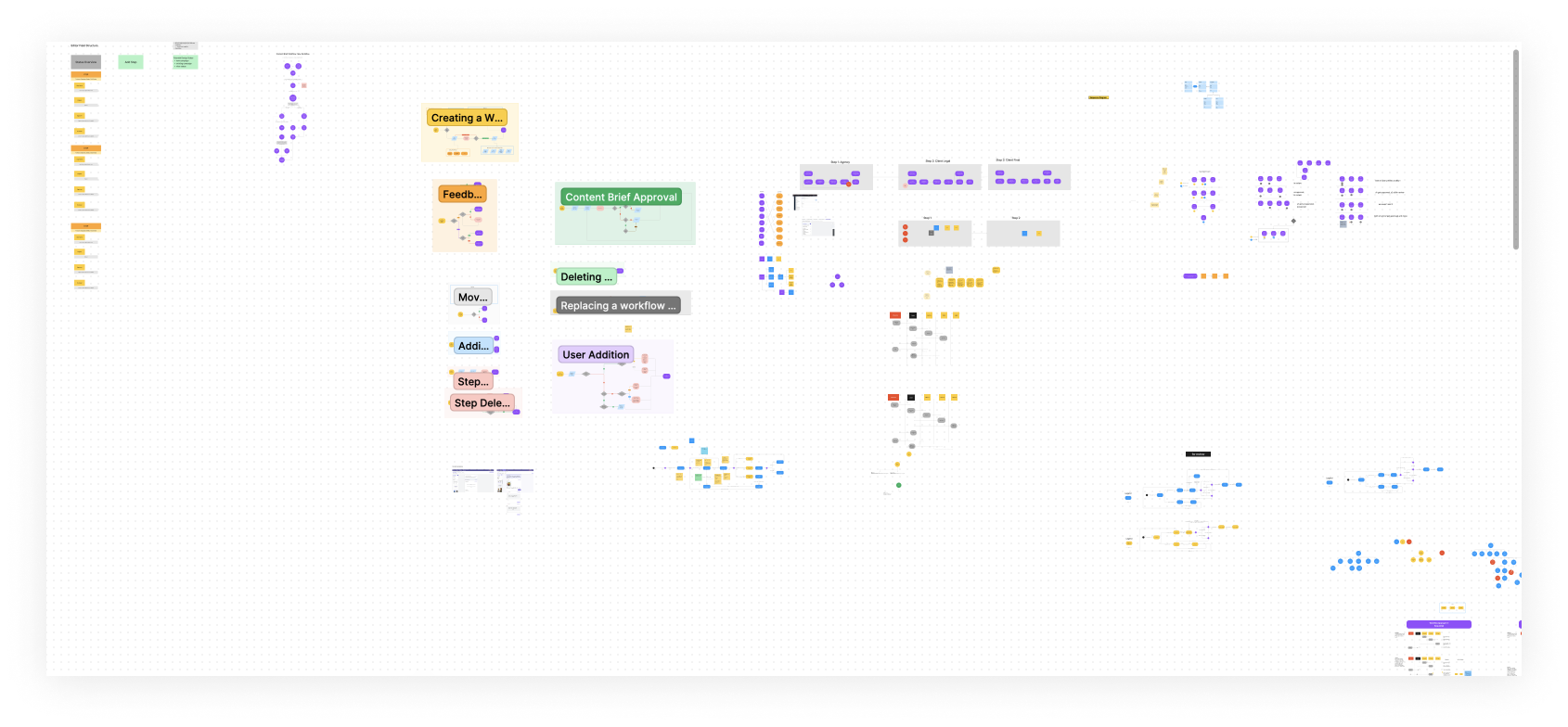
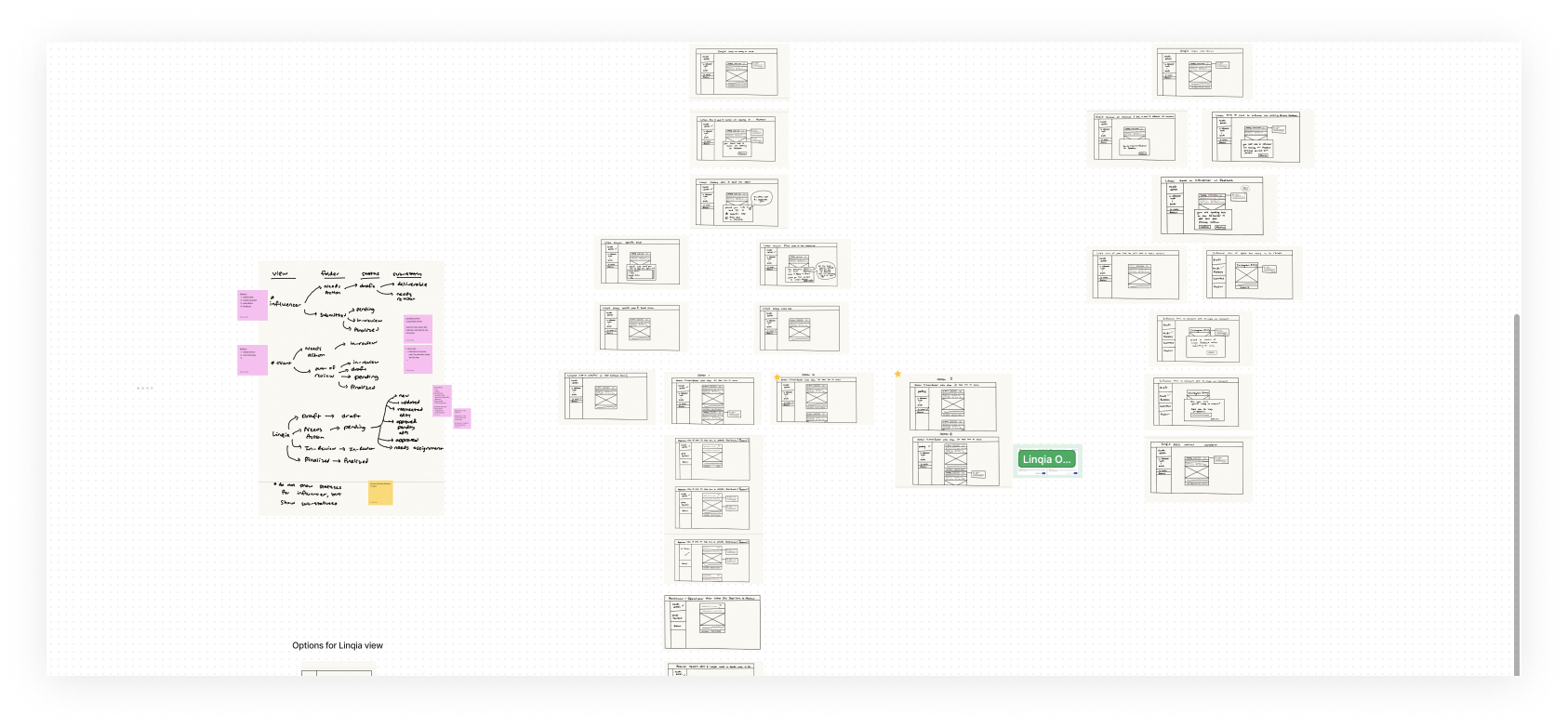
As a cohesive team, we engaged in extensive whiteboarding sessions to map out user flows and story mapping. This approach allowed us to thoroughly assess potential pitfalls or issues in our intended product based on the requirements. Given the significant business impact and complexity of the product, we relied heavily on whiteboarding. Below are some glimpses of our quick and collaborative backend whiteboarding process, involving individuals from product, engineering, and key business stakeholders, all coming together to promptly identify any potential shortcomings.
What the feature looked like before
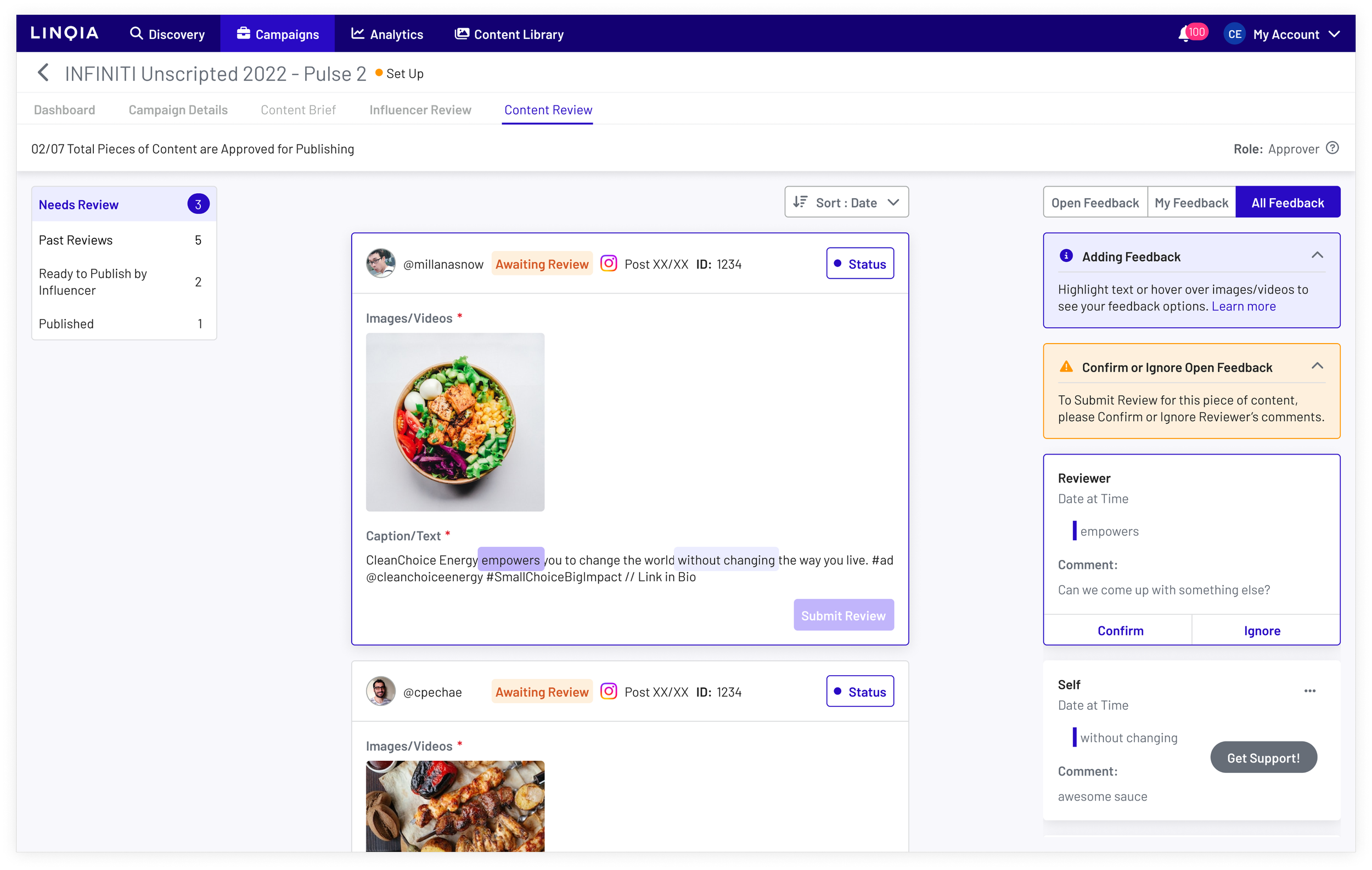
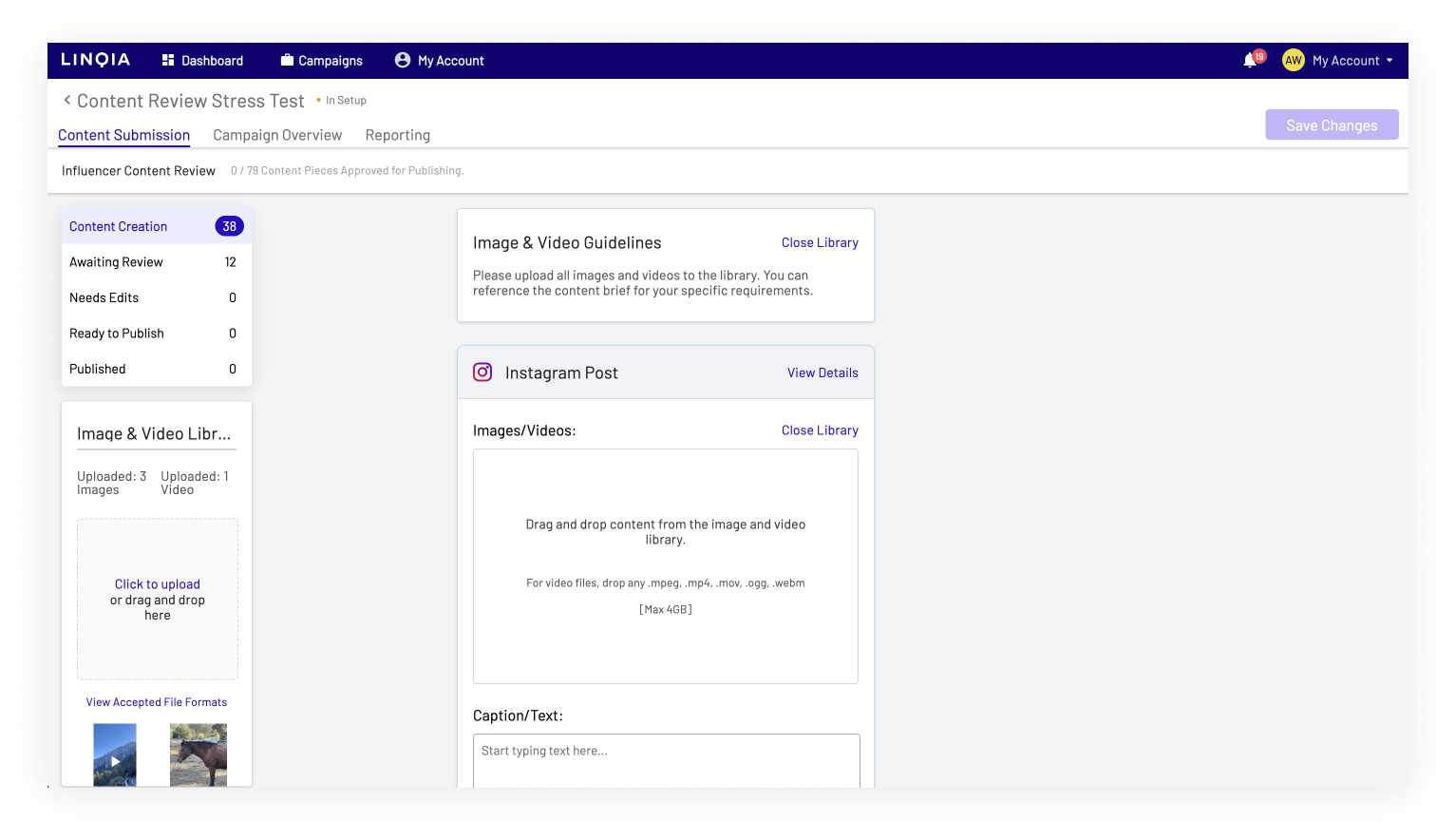
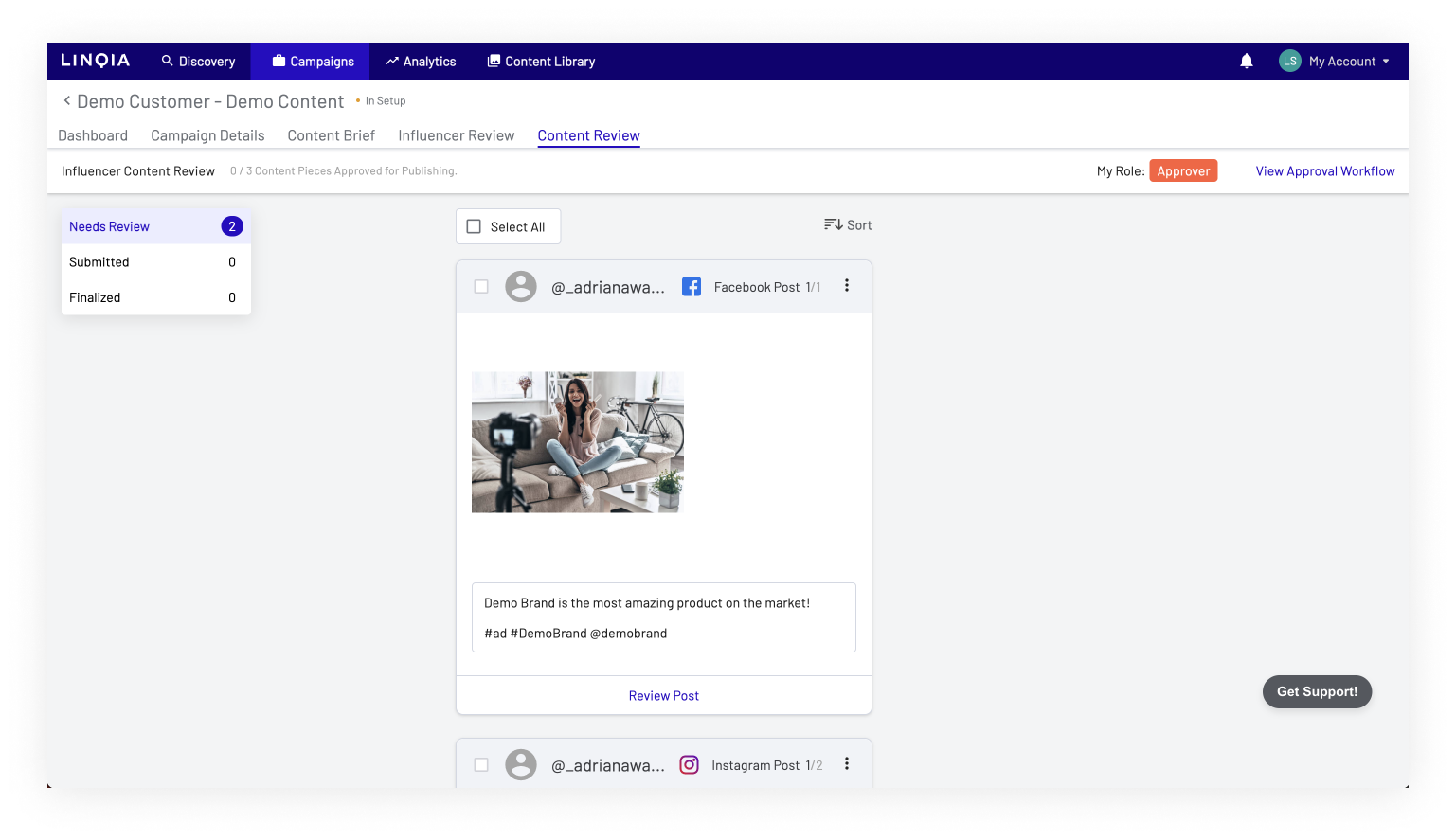
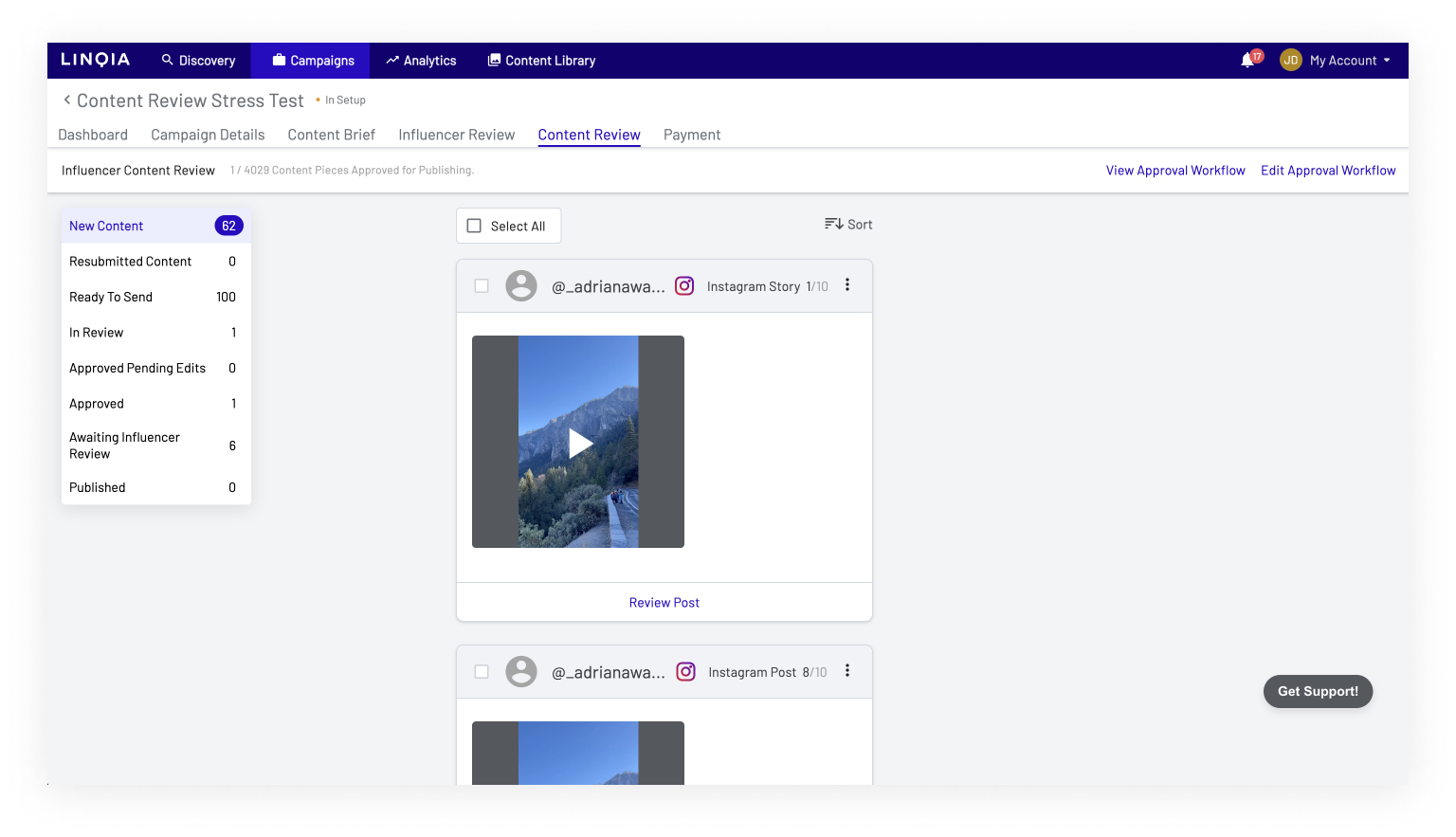
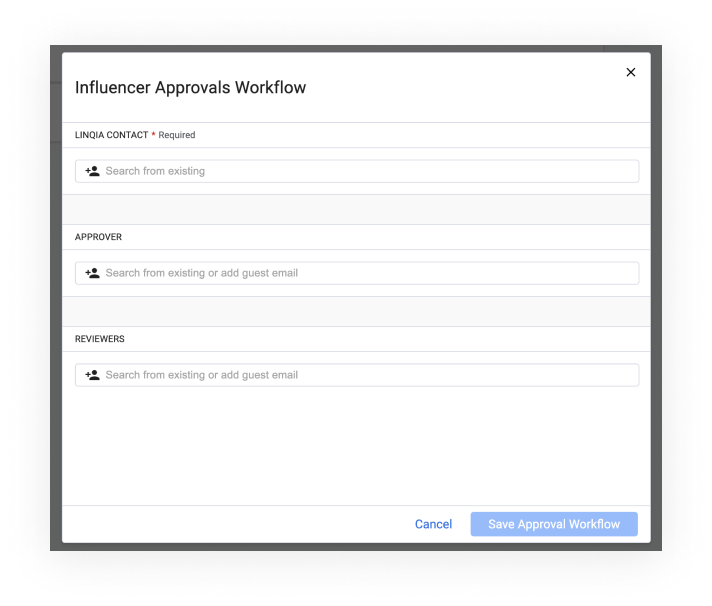
Below are screenshots of the previous page, which was plagued with usability issues discovered during UX research and stakeholder reviews. While we couldn't address all the problems, such as modifying the media asset upload and select function or replacing the folder pattern, we did make some improvements.
Early Concepts, Feedback Cycles & Usability Testing
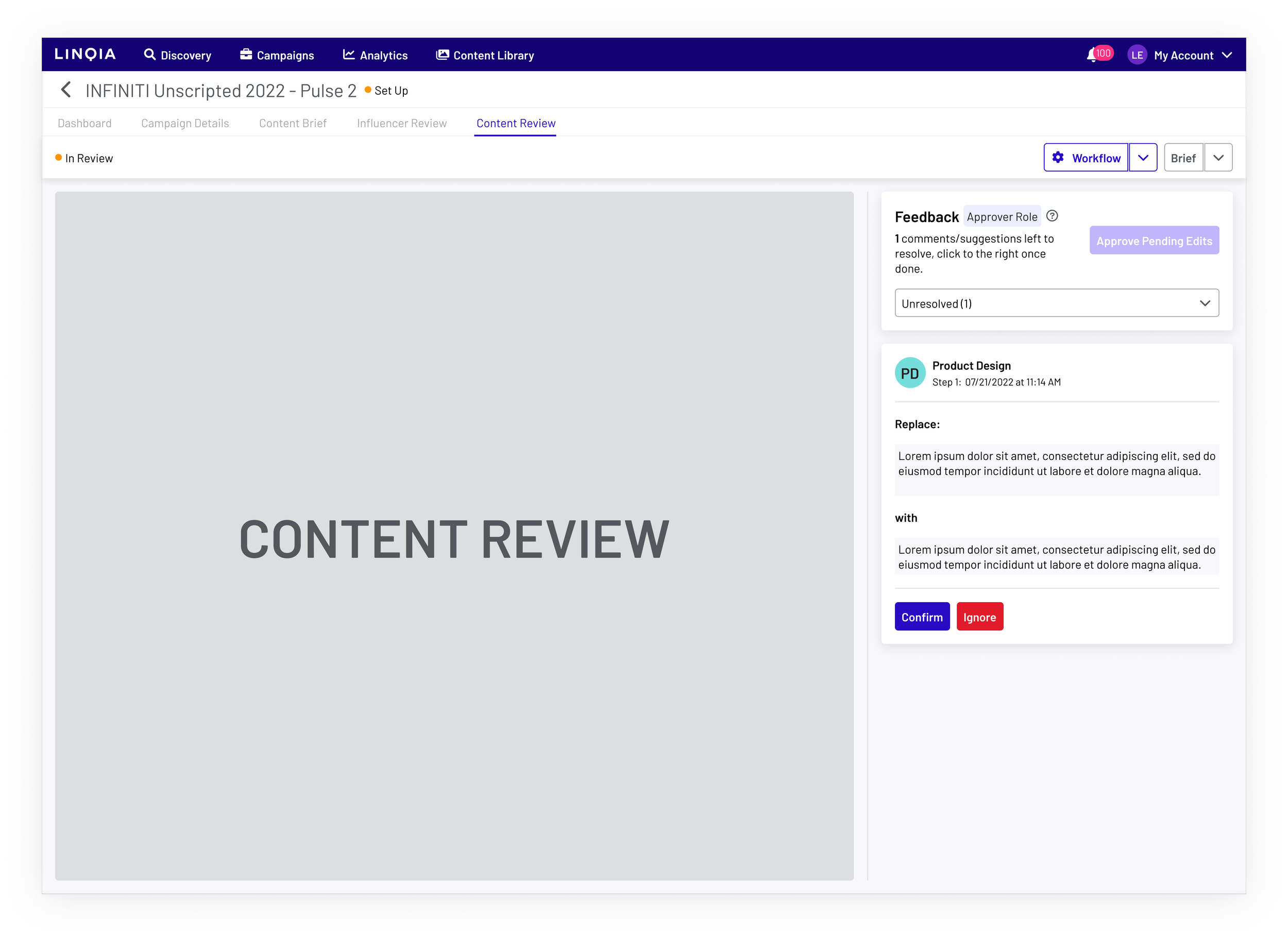
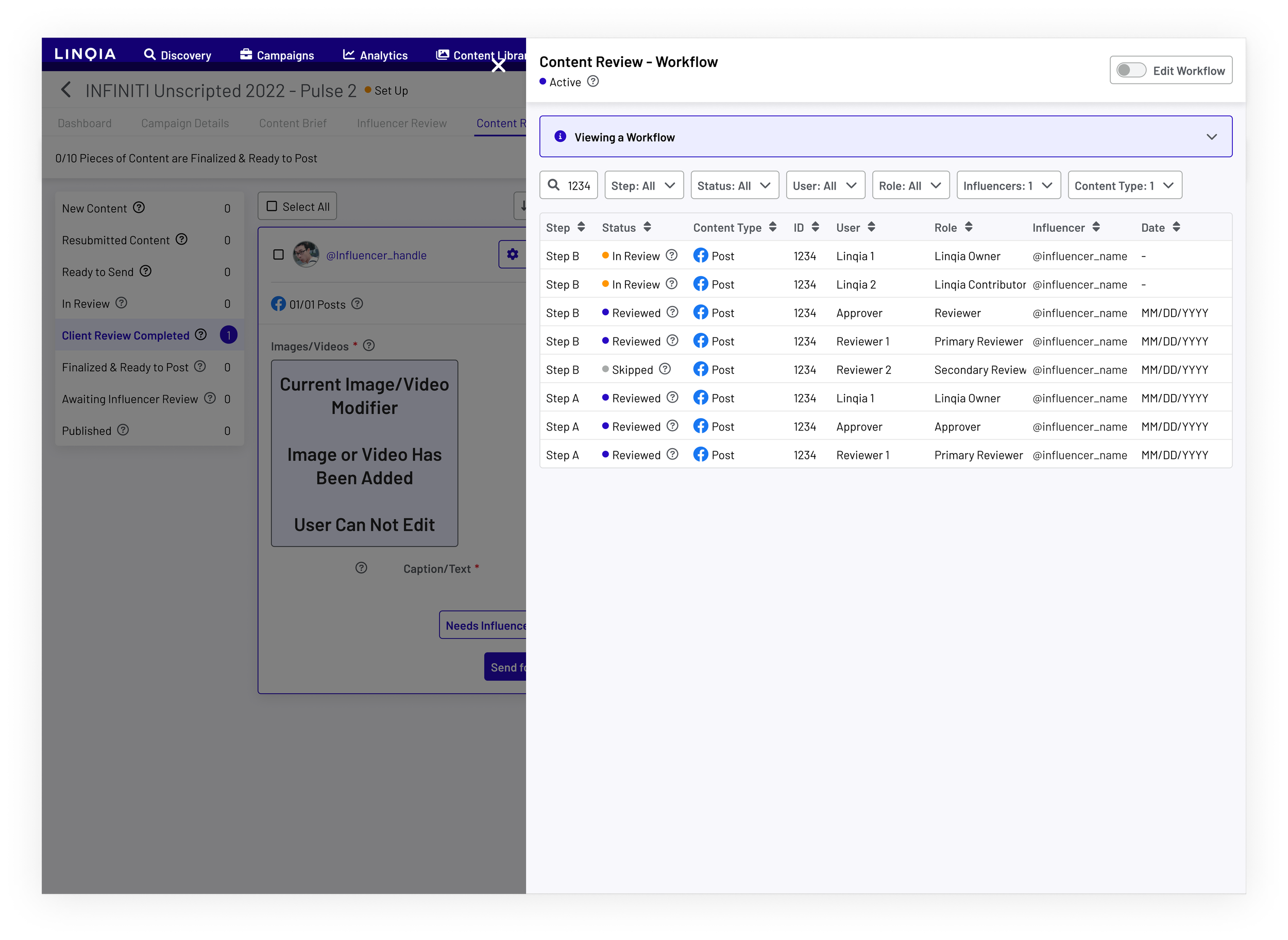
Using the newly established product design system and design principles, I conducted multiple iterations of the Workflow editor and the potential revised Content Review page. Key highlights included introducing a new form editor, which was not previously established, and aligning the end product for personas to avoid building and maintaining the same core feature in multiple ways. We modified the member addition process for reviewing content. Additionally, we added more onboarding indicators to help users understand the product better, based on feedback indicating that the product required significant guidance for ease of use.
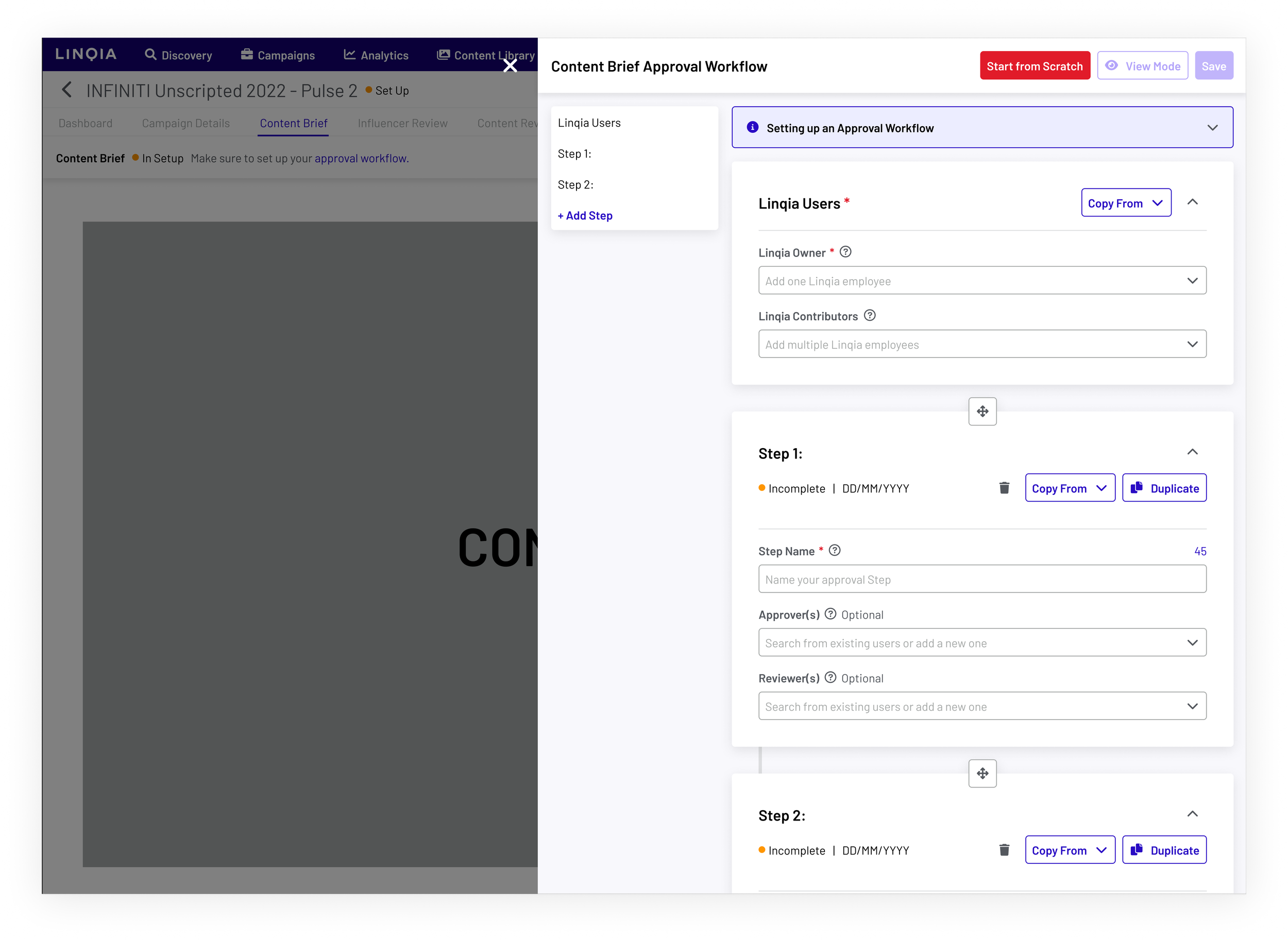
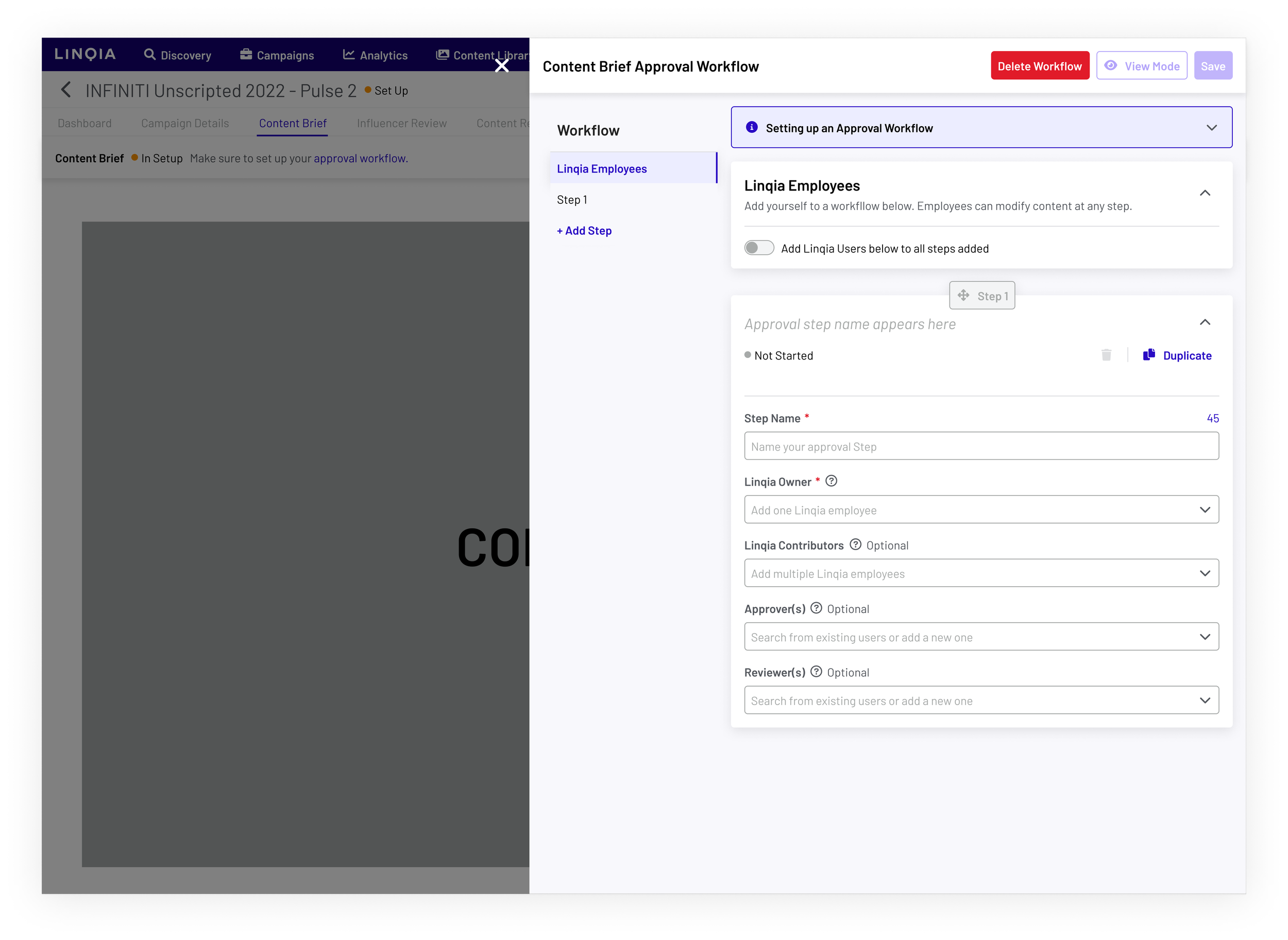
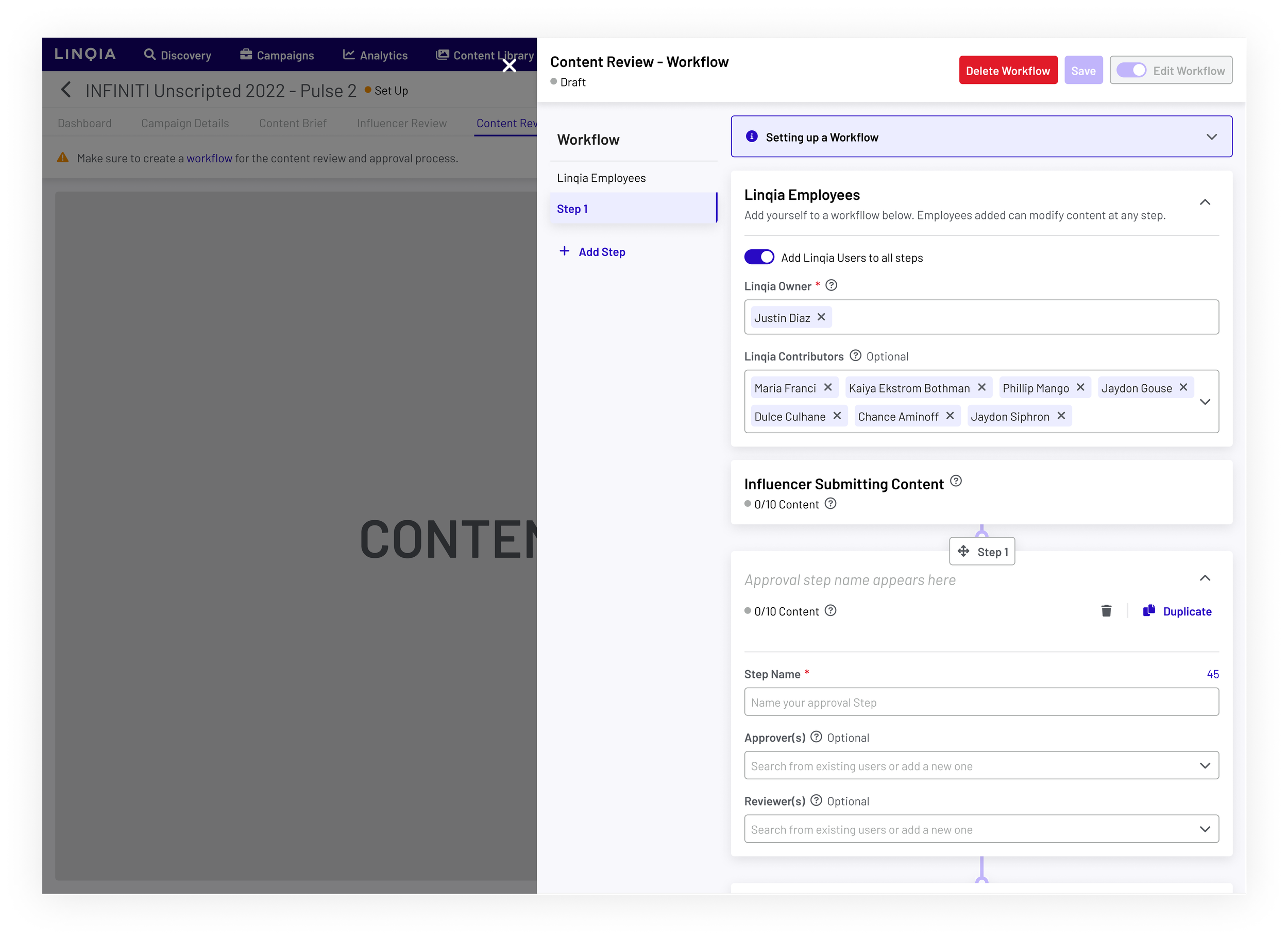
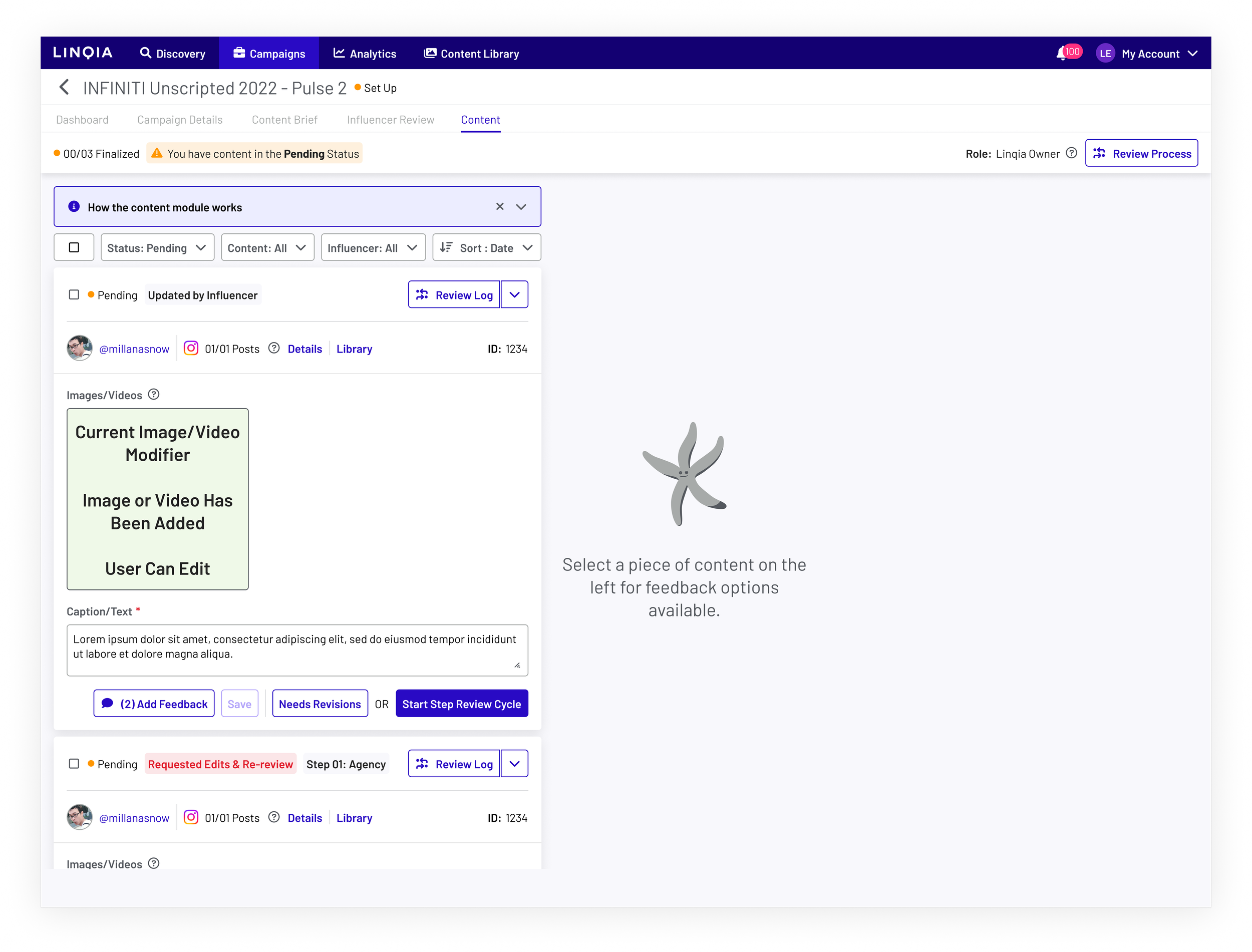
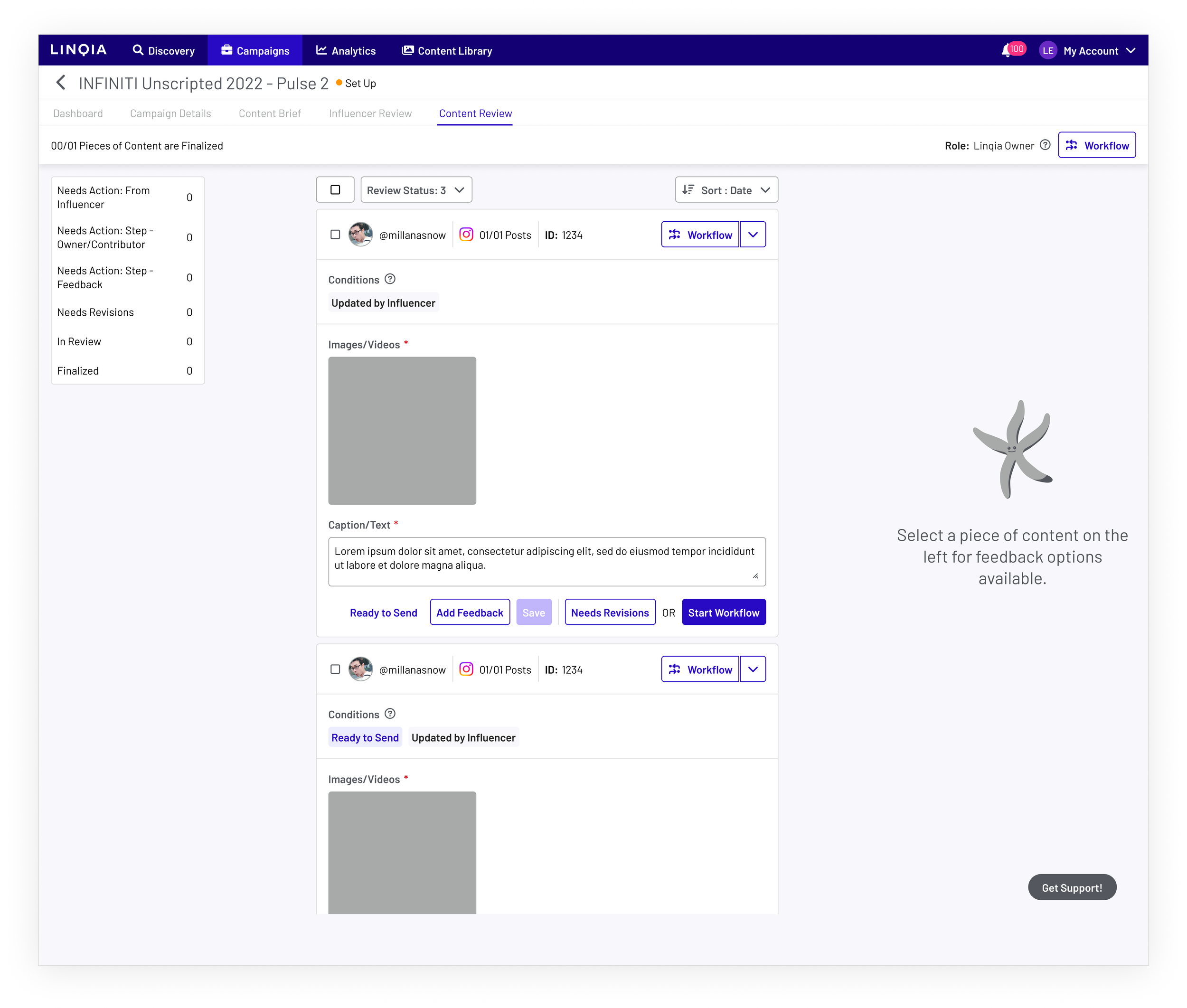
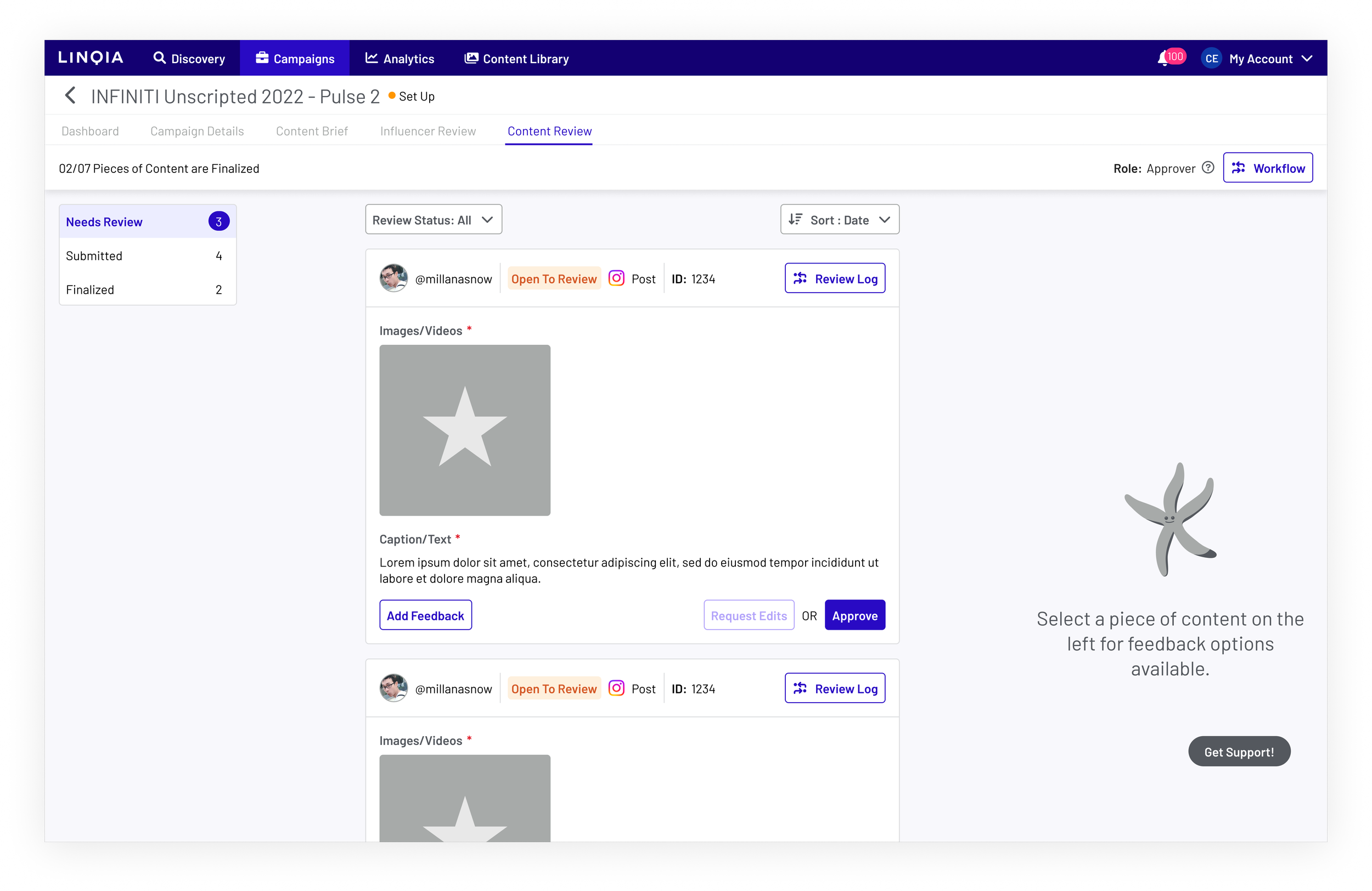
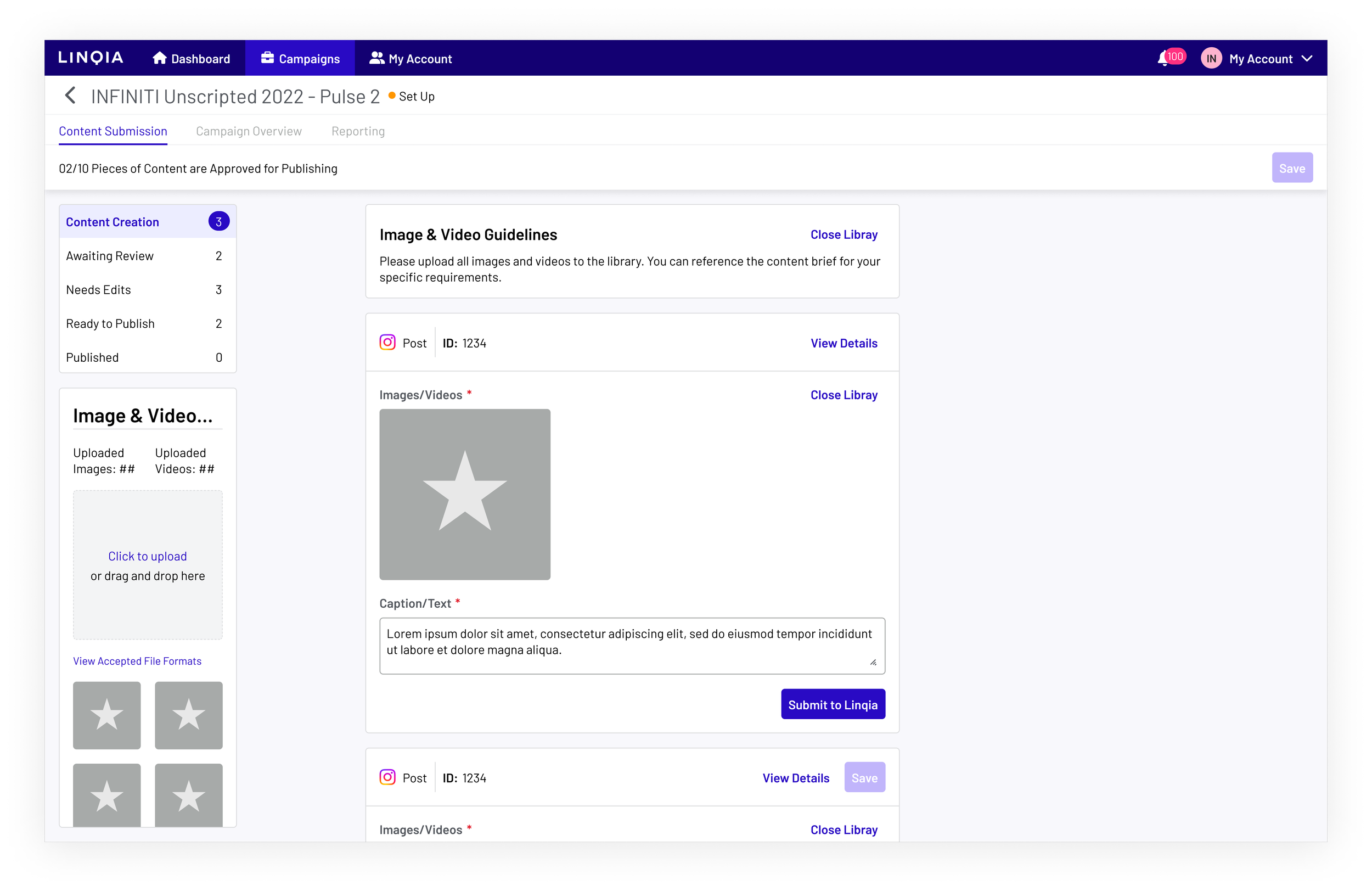
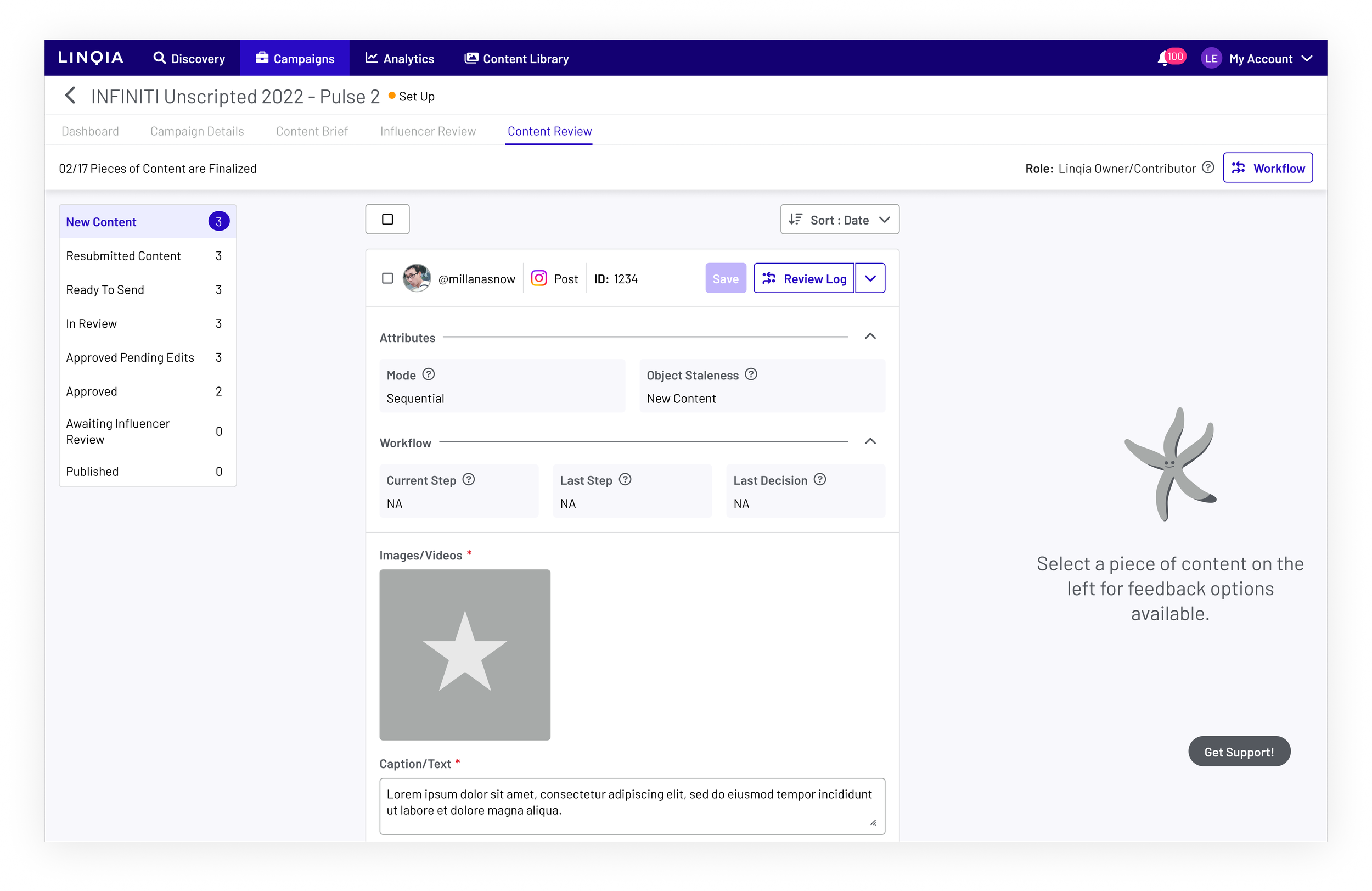
Key highlights from the usability tests, conducted using Maze, influenced the final look and feel of the product.
- Early designs had the editor and review status table in a separate area to allow users to modify all review cycles for Clients and Linqia at once. However, it was identified as too detached from the module, so we moved it to a side drawer for better integration.
- Simplified and standardized the form editor.
- Renamed some folders to enhance user-friendliness, considering the potential replacement of folders with real statuses in the future.
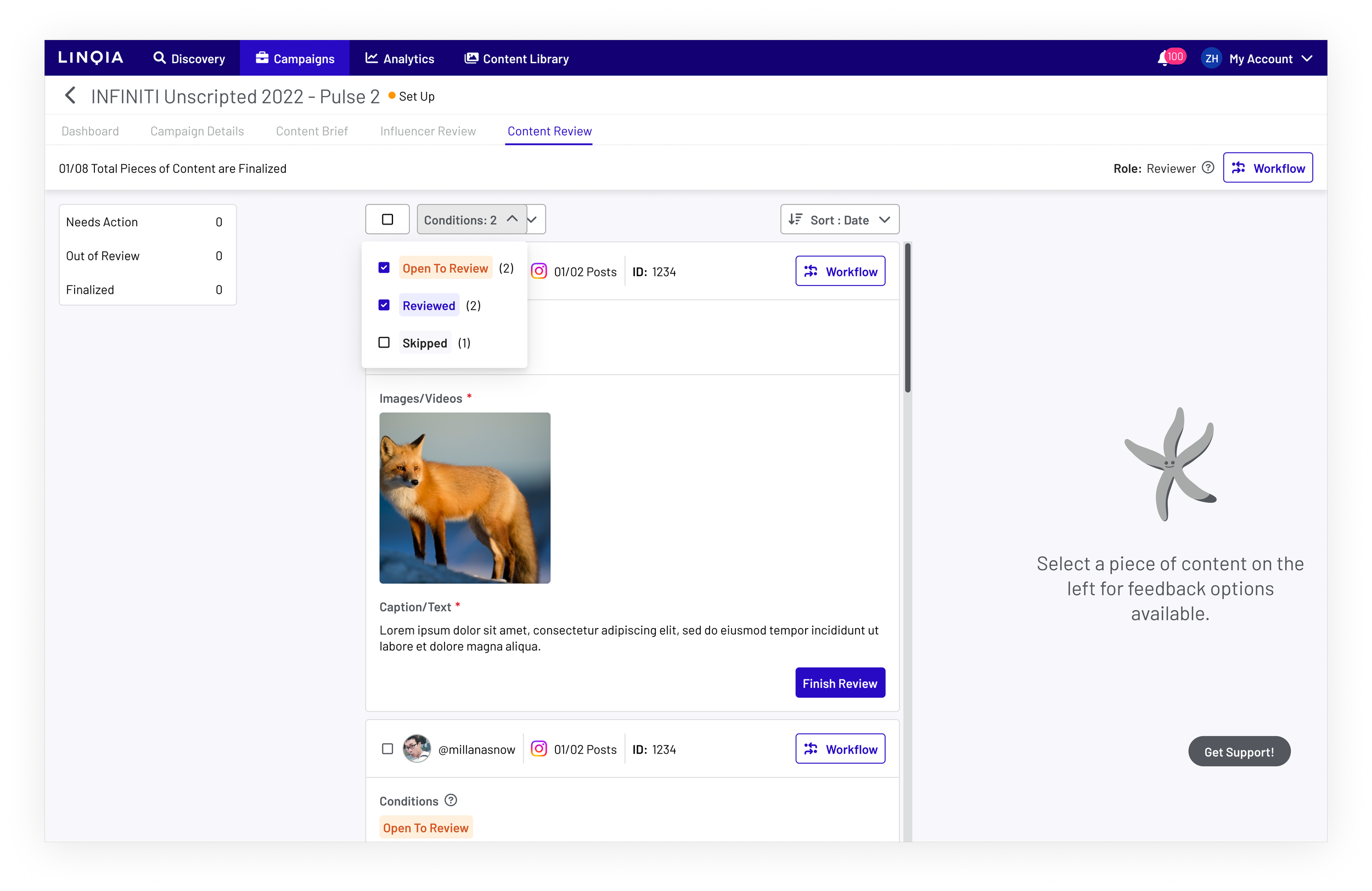
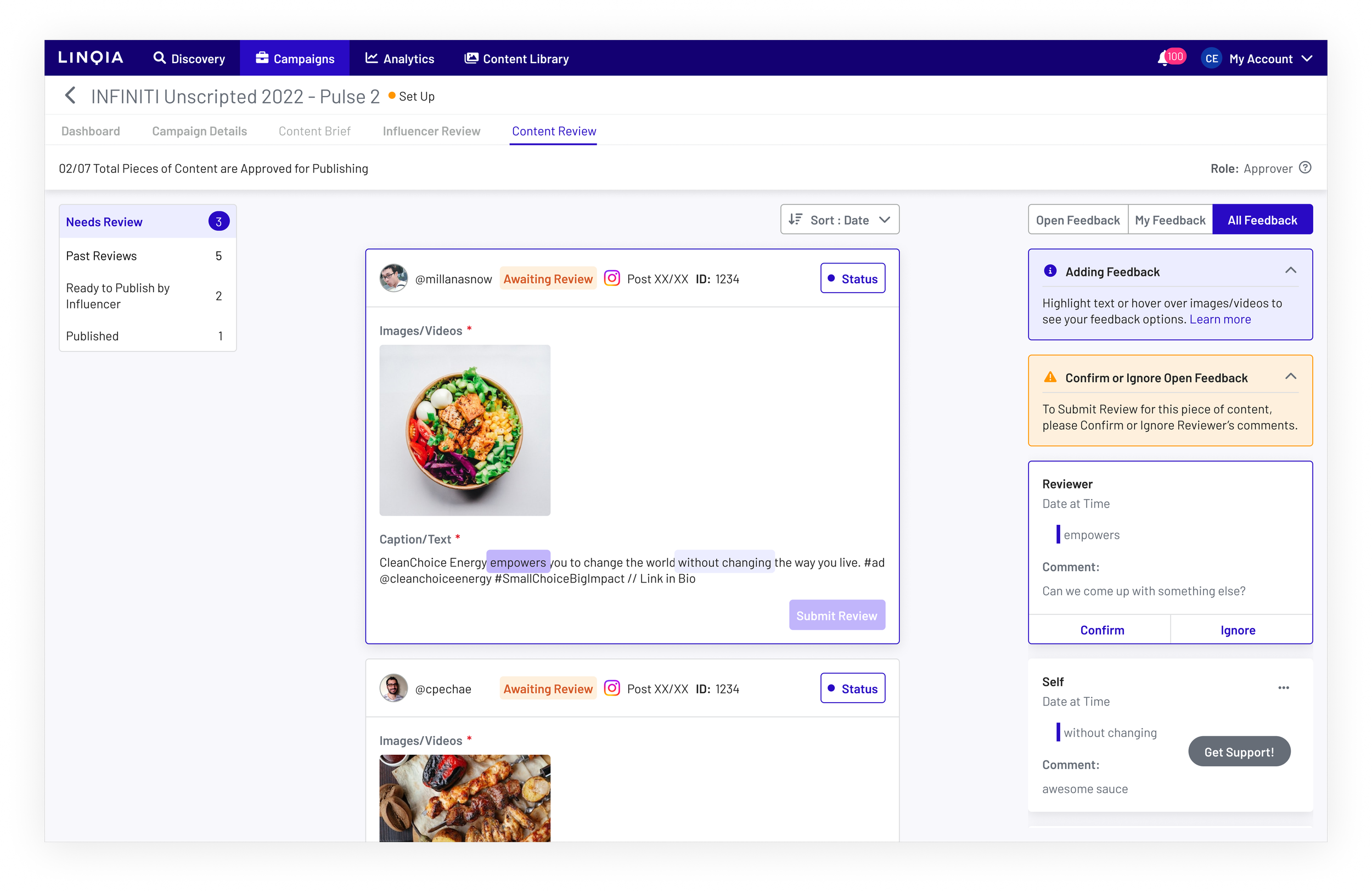
- Added clear indicators to content cards to inform end-users of the review status.
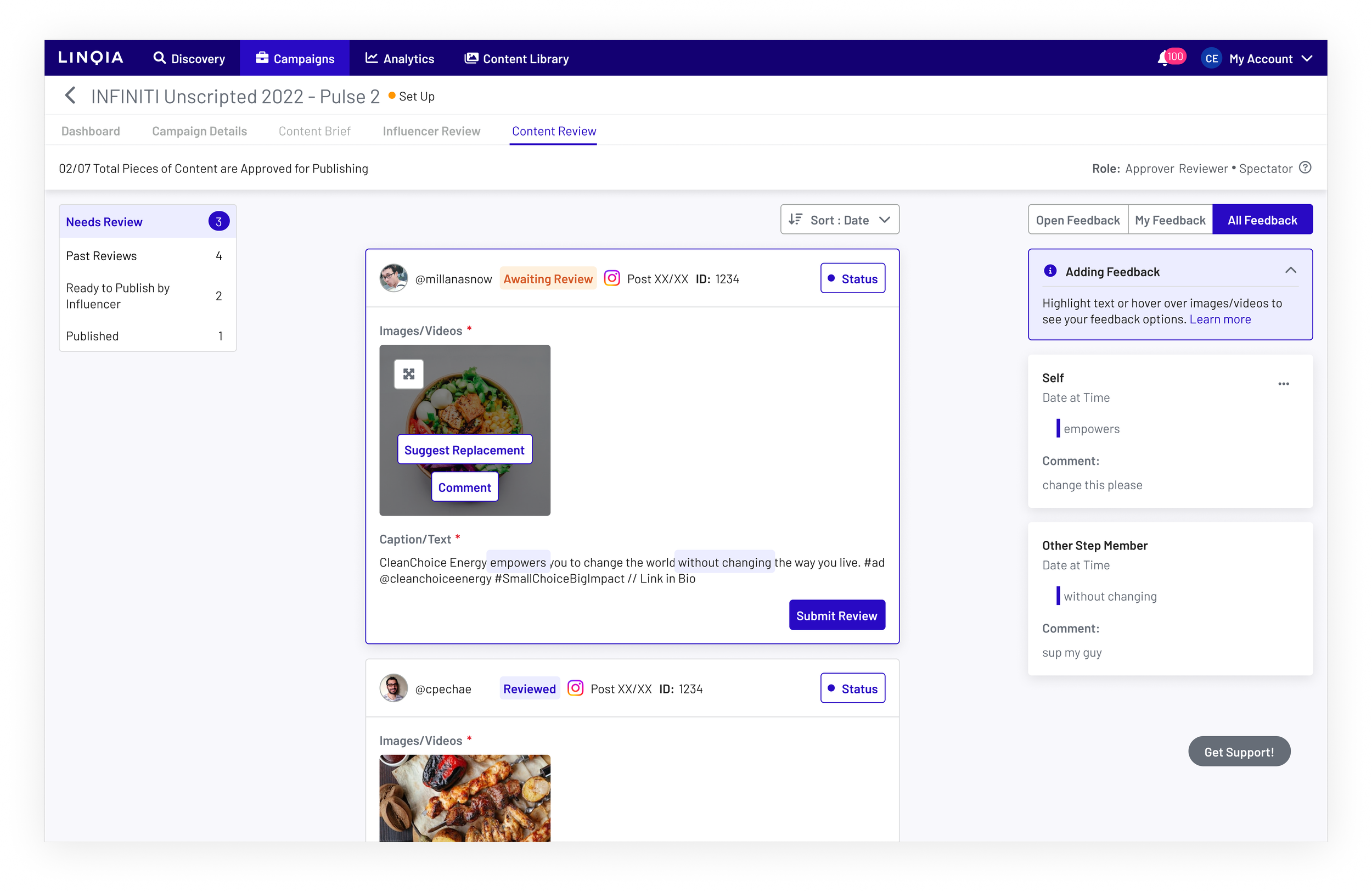
- Transferred hidden features from the context menu of individual cards to the core content card itself for improved visibility and accessibility.
- For this initial project, we chose to stick with folders and not make a transition to more traditional status indicators, so as to prevent any expansion of scope that would exceed the consensus we all agreed upon.
Influencer Persona
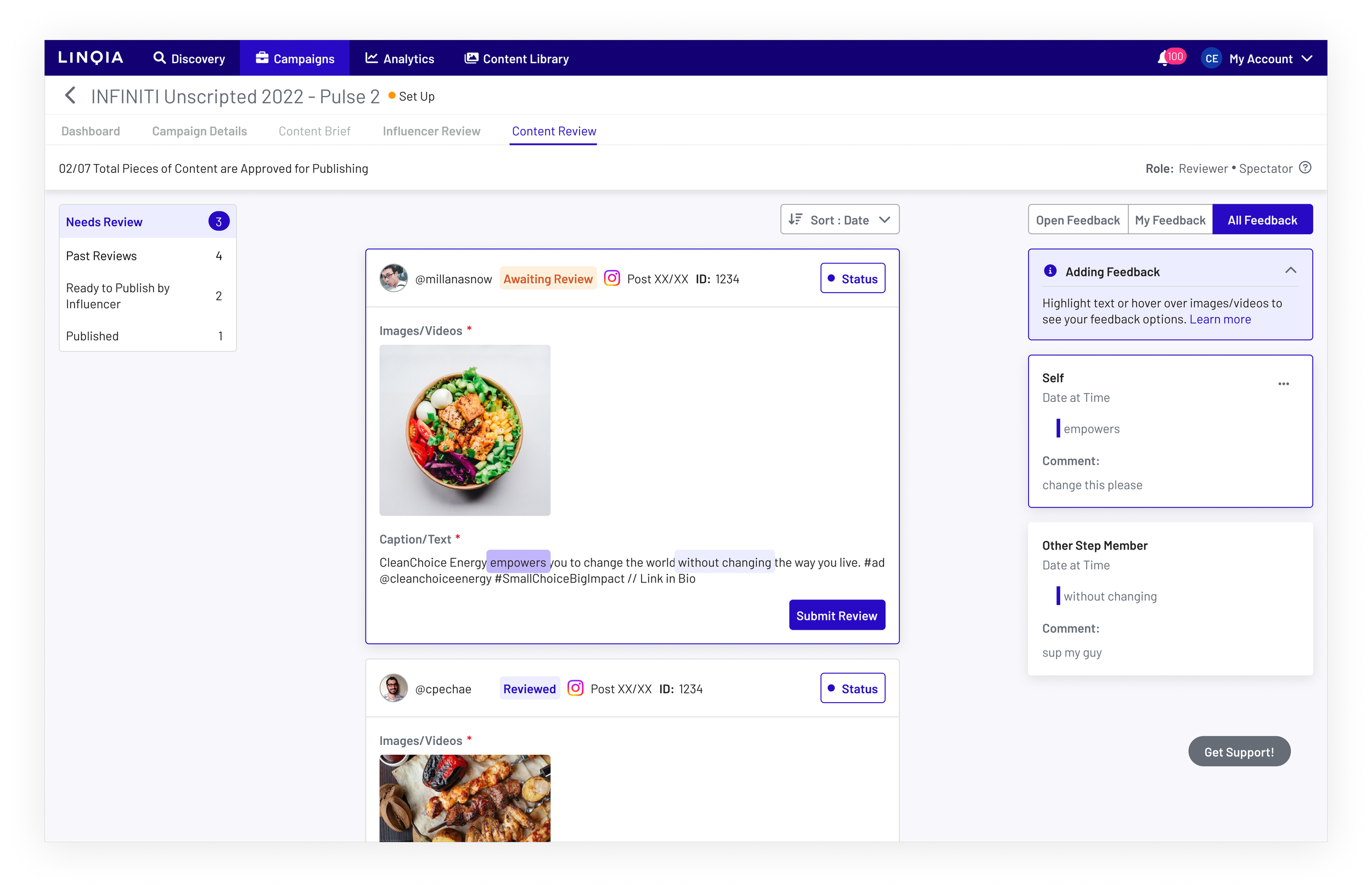
In the role of an Influencer, individuals are required to upload their media content, which is subsequently assessed by other users who provide feedback.
-
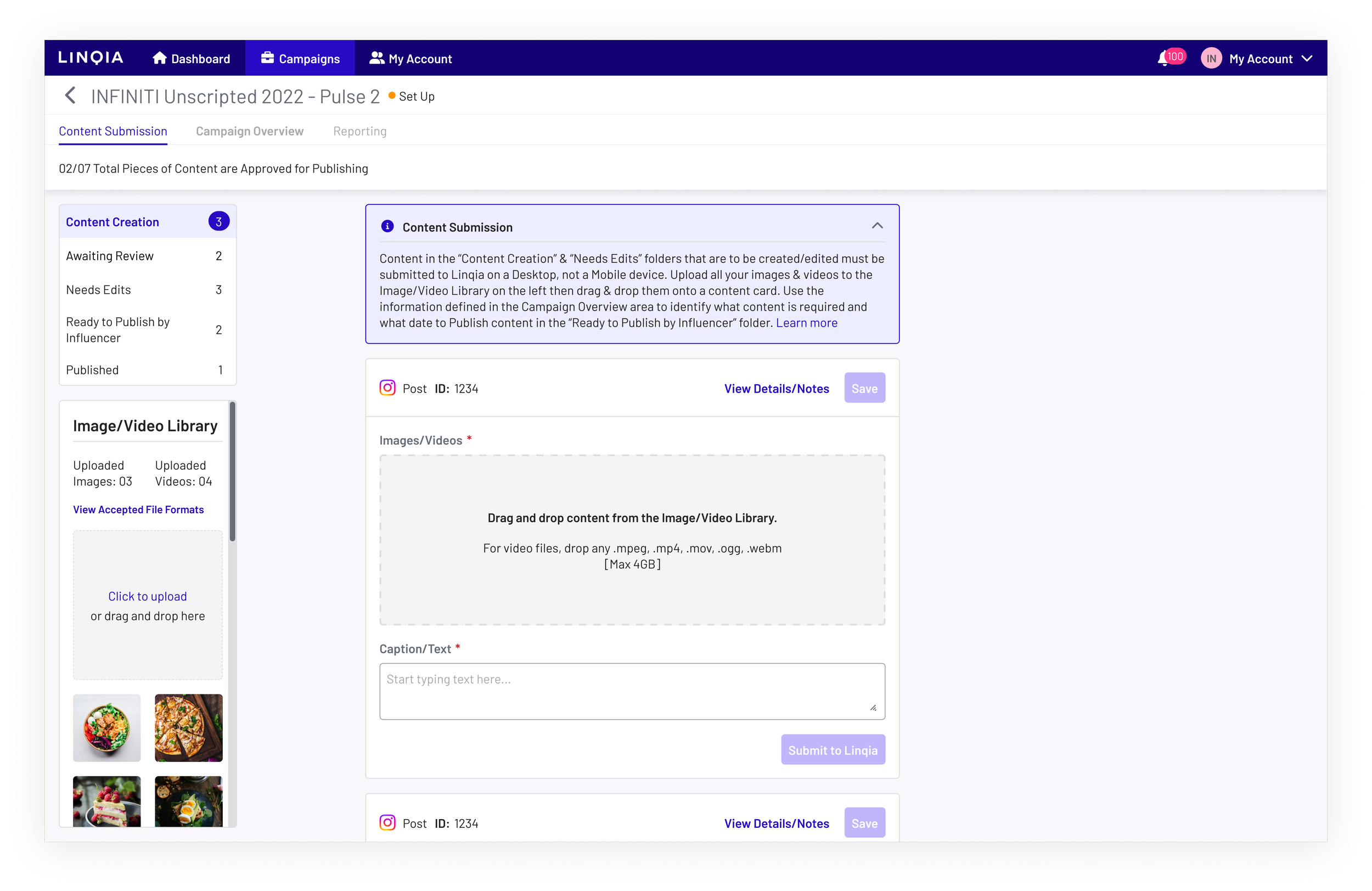
User has to add their media
-
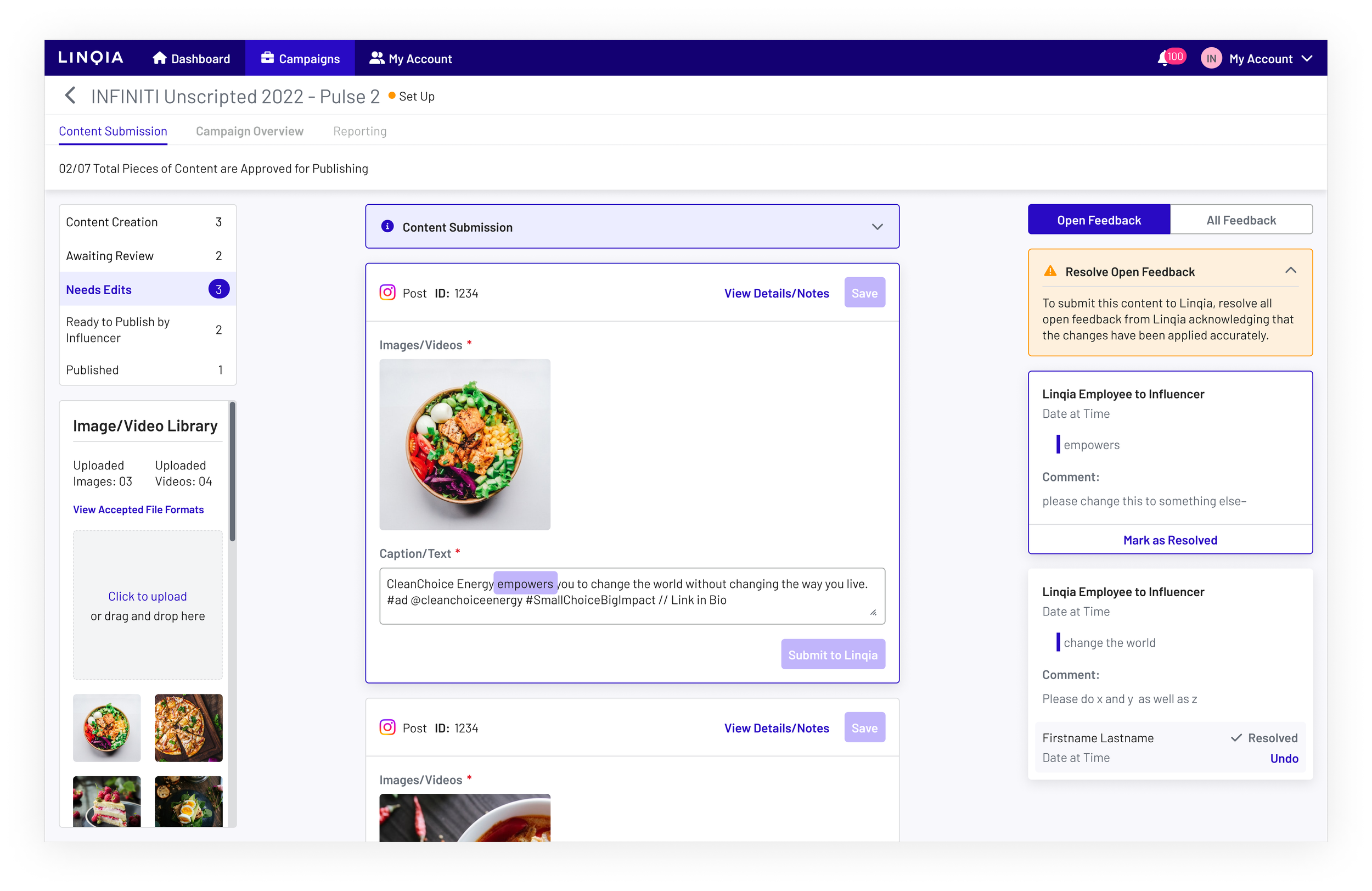
User can see the feedback given by stakeholders.
Linqia Account Managers
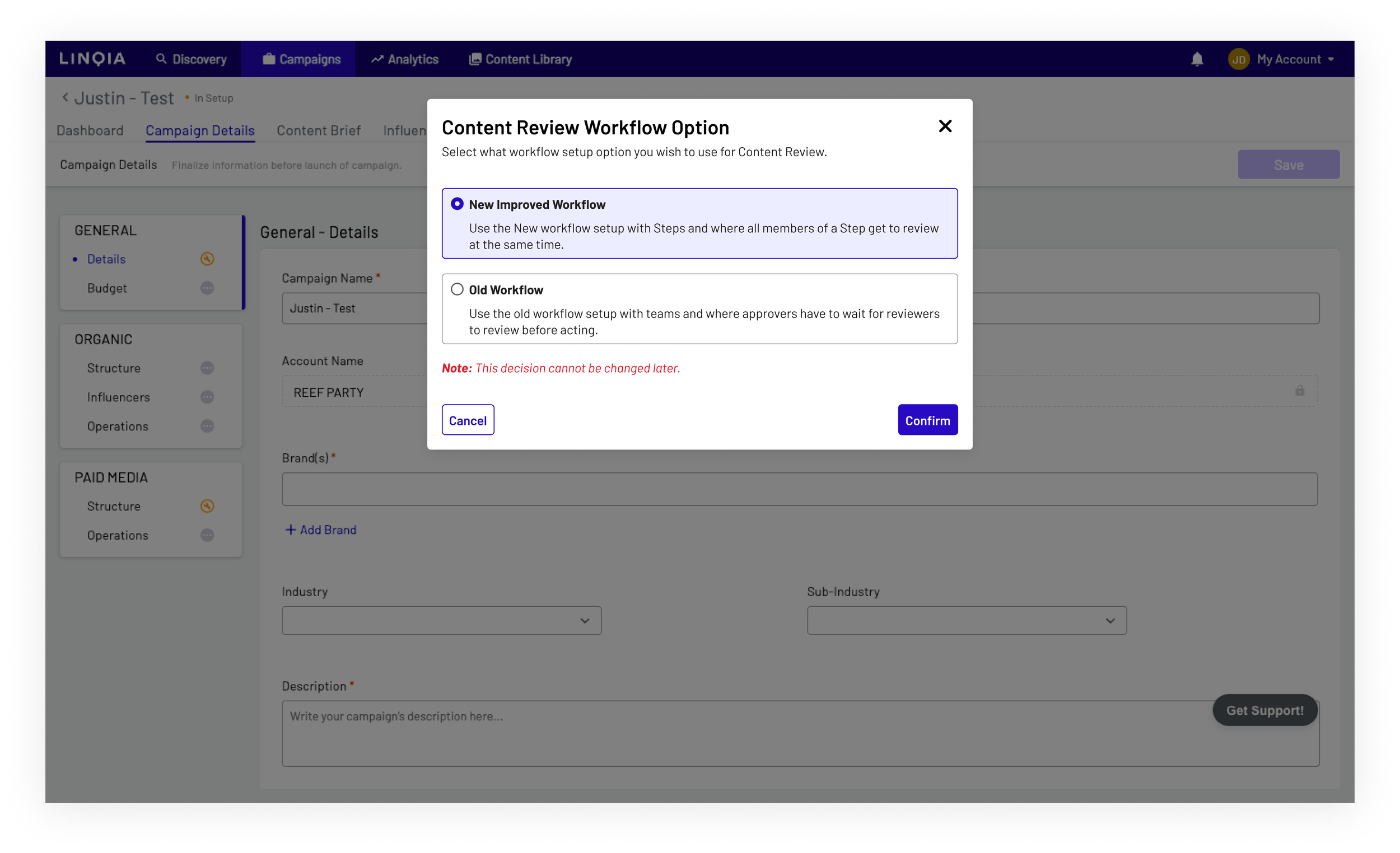
During the project's initial release, Linqia Account Managers were required to choose to adopt the new workflow. By default, we encouraged users to embrace the New Workflow to showcase its capabilities, while gradually transitioning users to the new product. Over time, we systematically transitioned all users to this new process before ultimately discontinuing the choice.
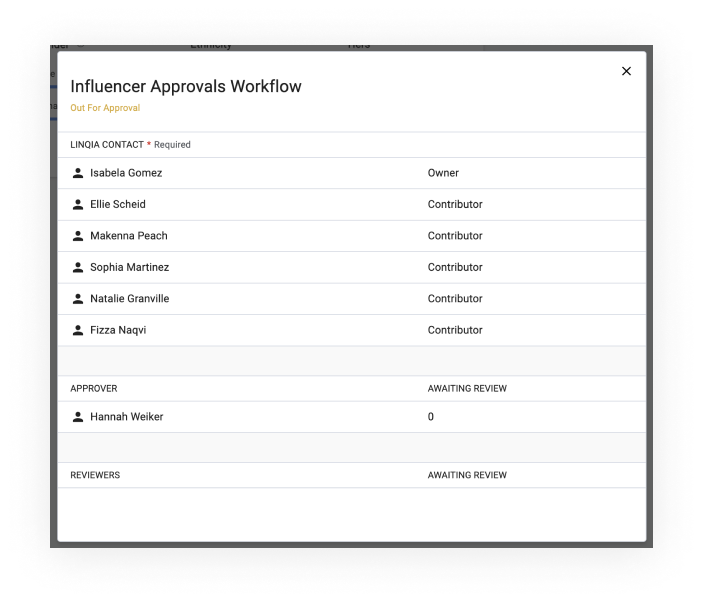
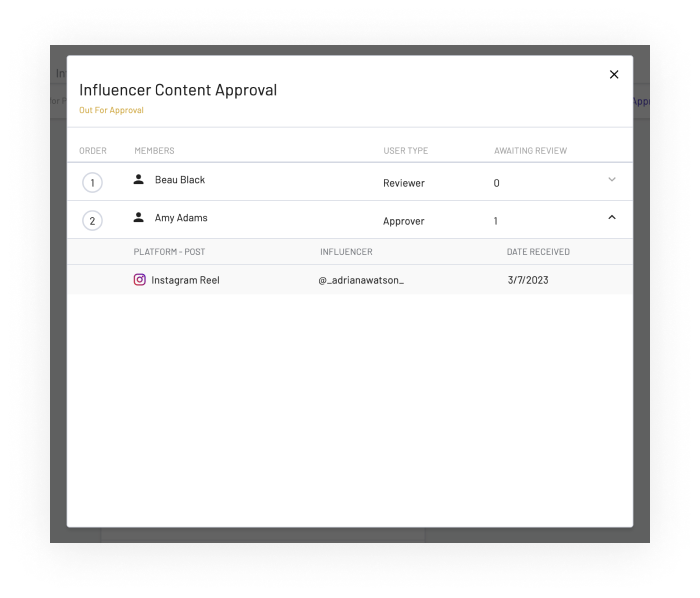
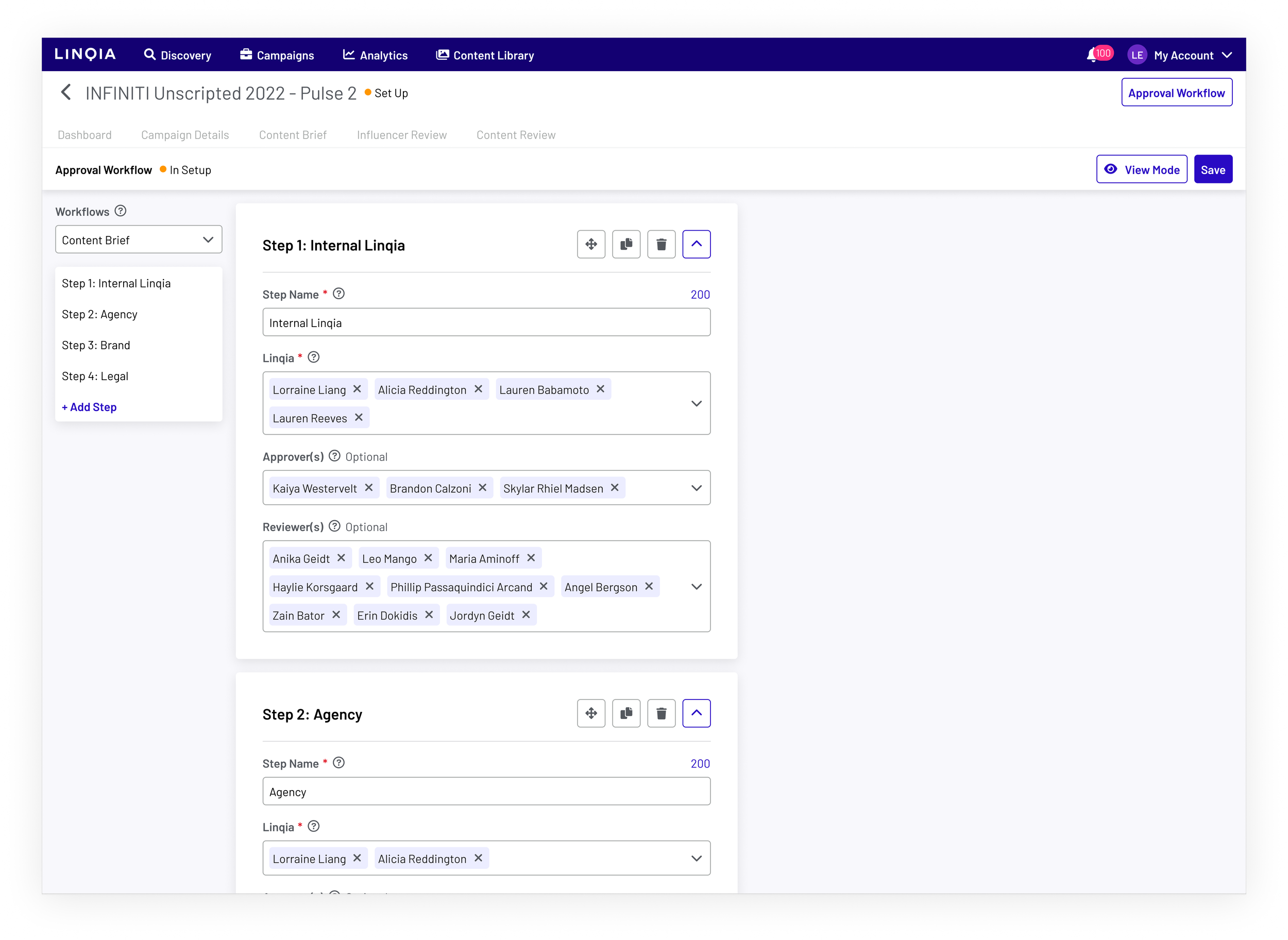
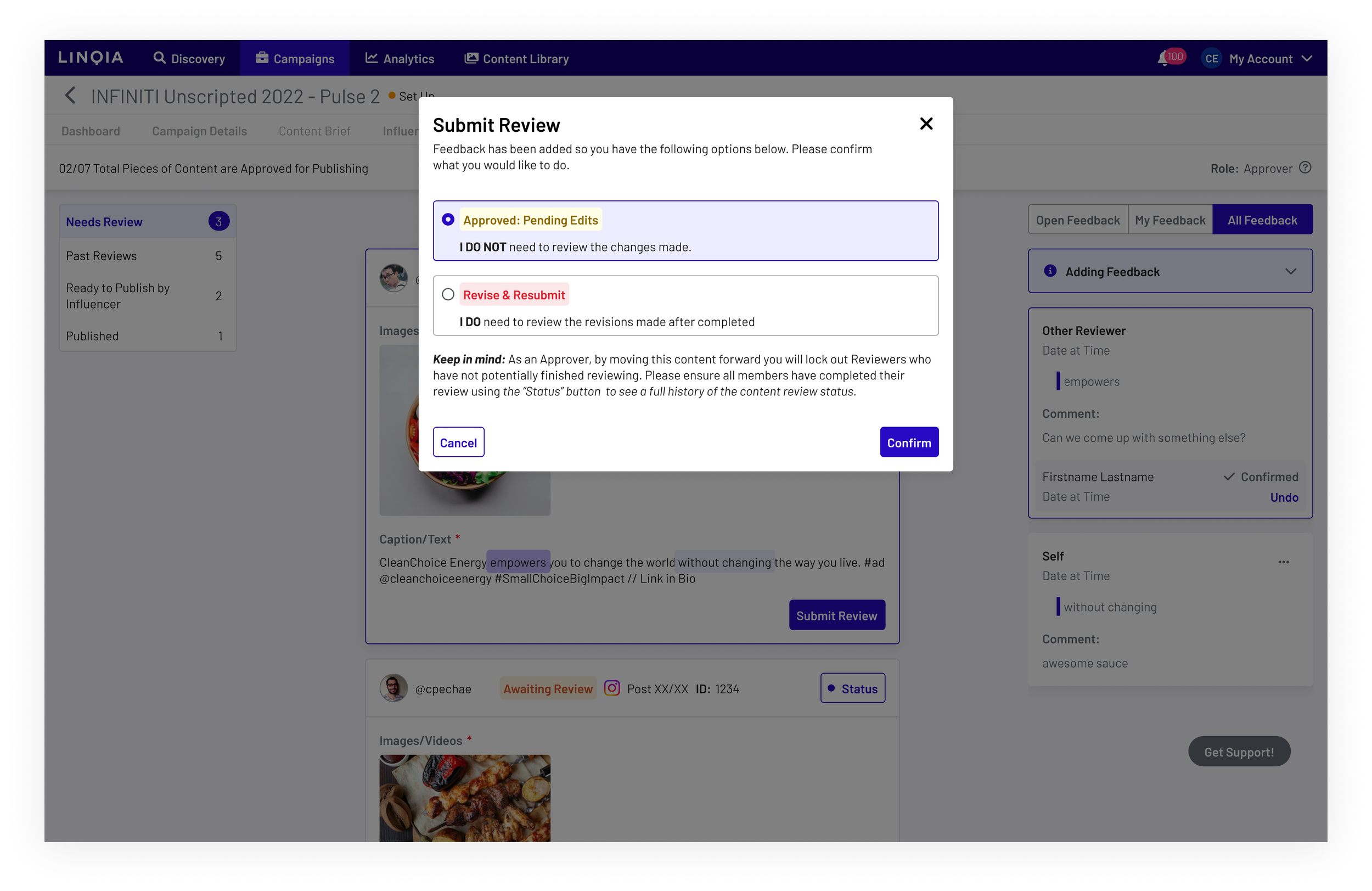
Below, you'll find illustrations of the Workflow editor, designed for Linqia Account Managers. This tool helps them identify the relevant participants in the review cycle both from the internal Linqia perspective and the Client side. Additionally, the review log is presented below to the right, aiding Linqia Account Managers in tracking who has conducted reviews and who is yet to provide feedback.
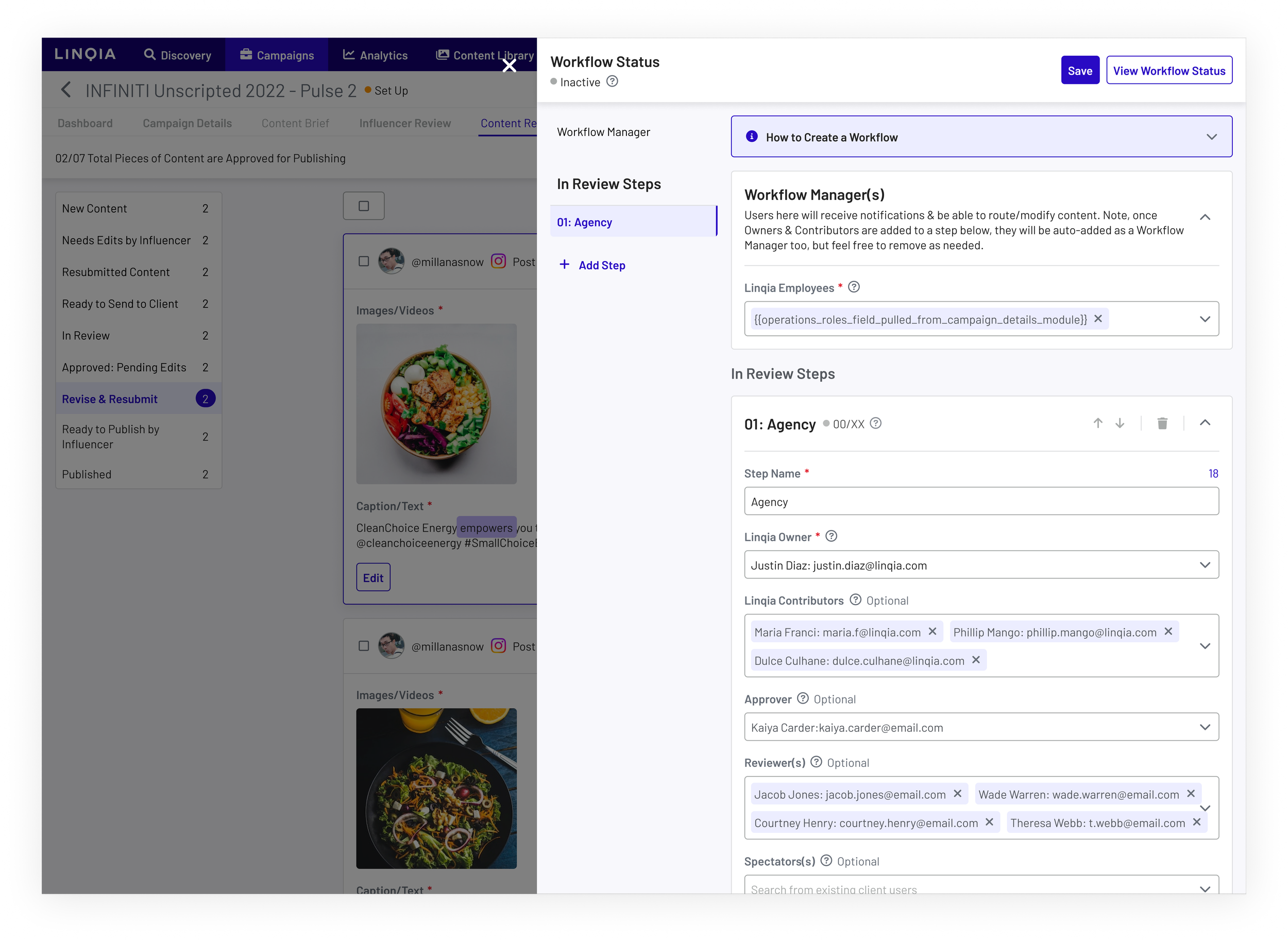
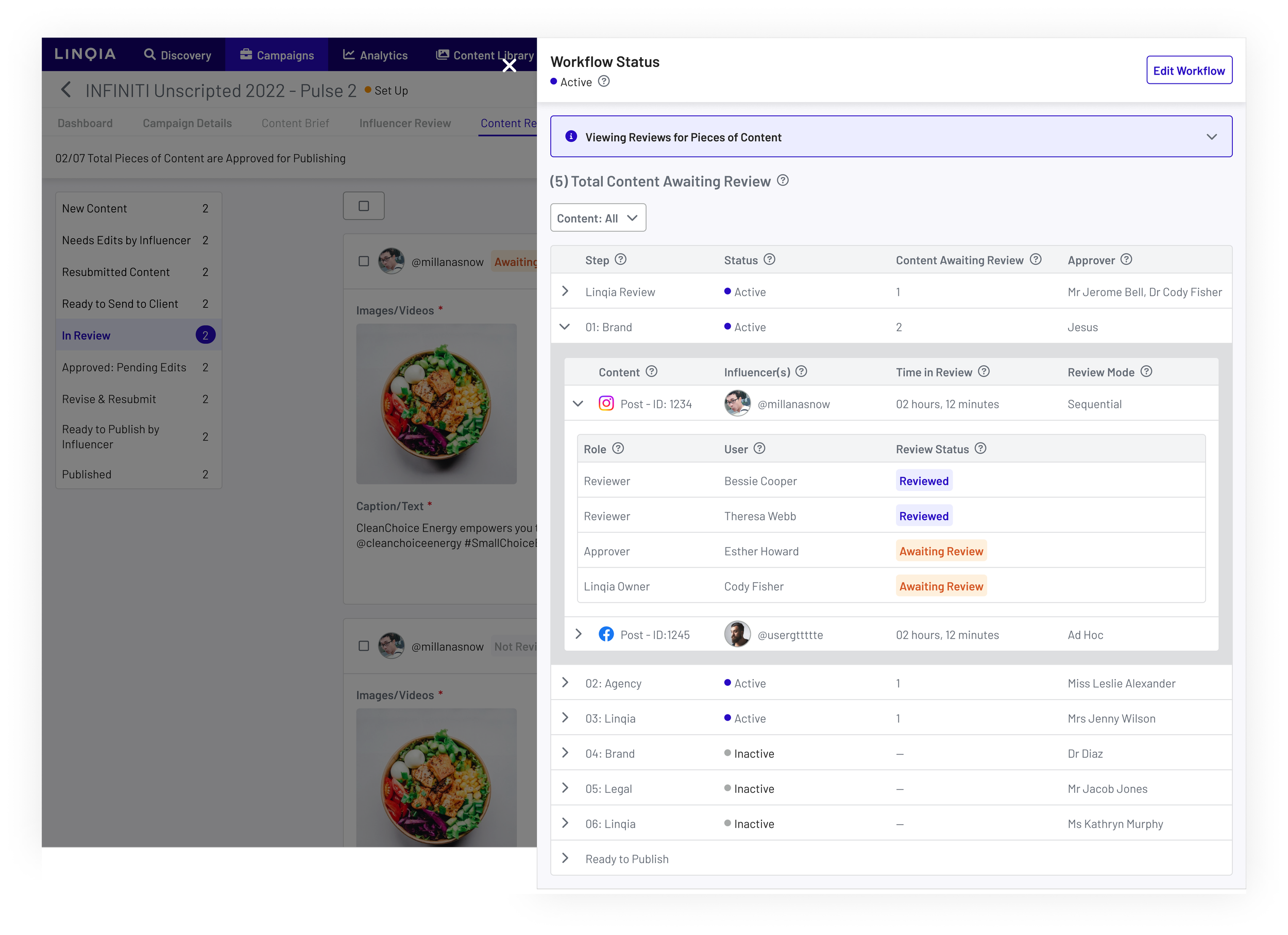
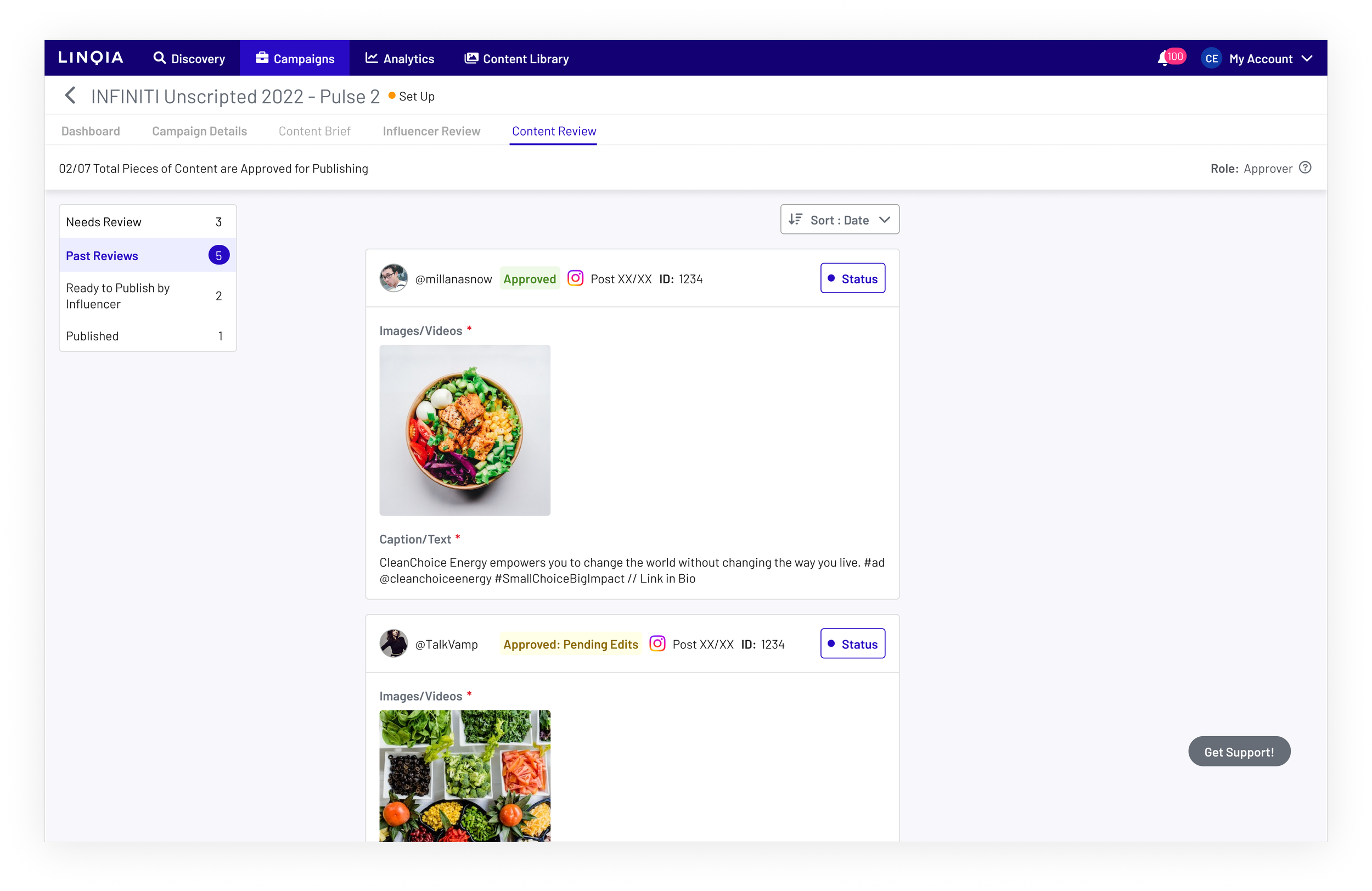
Observe how the new product's appearance and sensation eradicated disparities among user personas. This adjustment ensures that if a change were necessary, it would only require a single modification to a component, unlike the previous scenario where three separate modifications were needed.
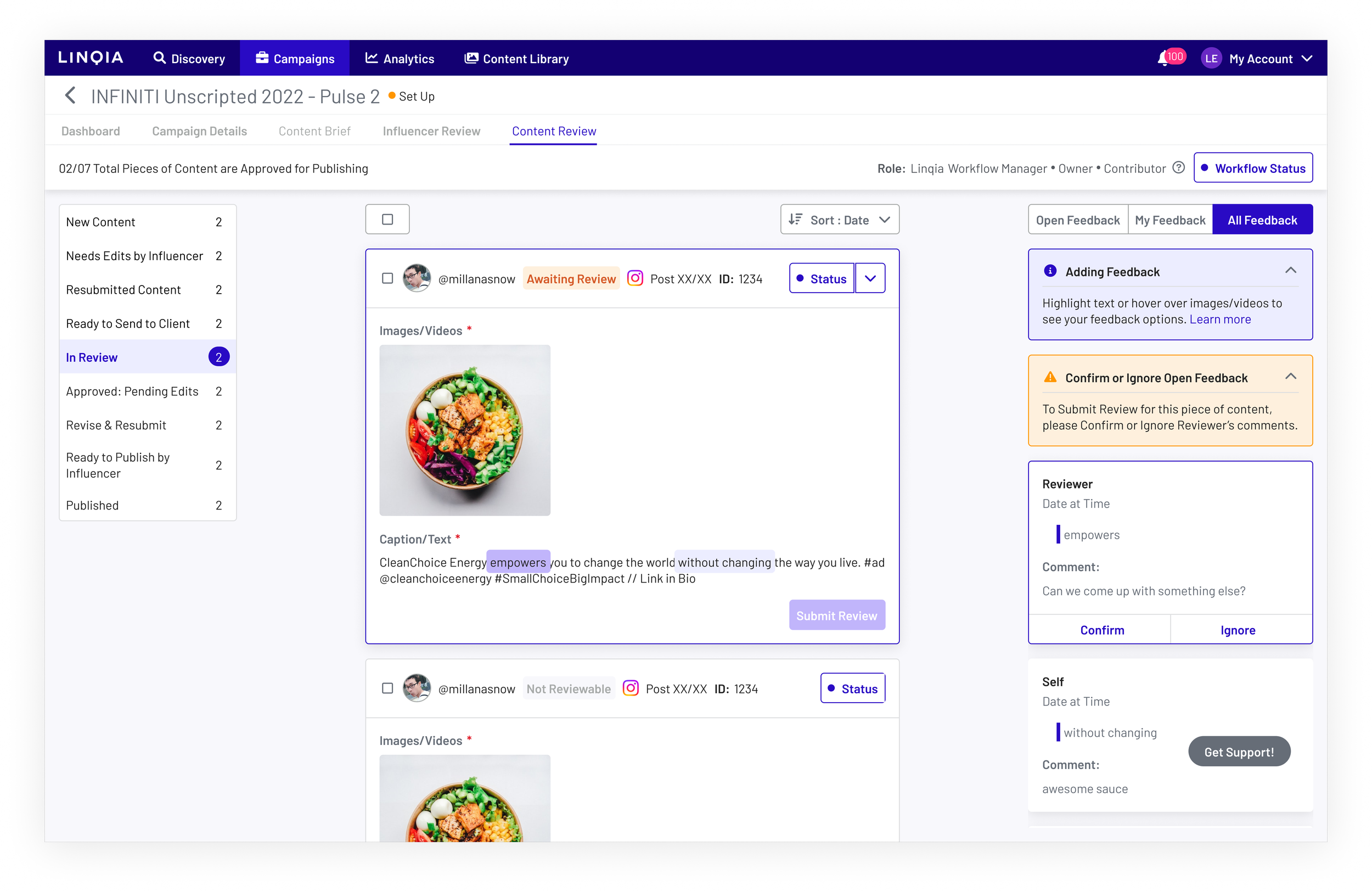
Client Personas
In the role of a Client user, individuals possess the choice to evaluate content shared by Influencers and offer feedback, which will subsequently be utilized to request modifications if needed.
Final Showcase & Key Outcomes
- We utilized this product to introduce a new review feature that would eventually be implemented across the entire Linqia product.
- As a product and engineering group, we lacked a universal, componentized form editor at that time. However, during this process, we created a universal editor that could be utilized in other enhancements of the Linqia core product. This editor was made responsive and could eventually bring the early explorative designs to life over time, leading to a streamlined UI.
- We optimized the review cycles, reducing the average review time from days to just hours.
- We enhanced user-friendliness and the Linqia-to-Client relationship by making it easier for users to pick up and understand how to review content.
- We enhanced every element of the complete product to ensure its alignment with the new design tokens, and to avoid hardcoded elements, thus eliminating the previously inconsistent user experience.